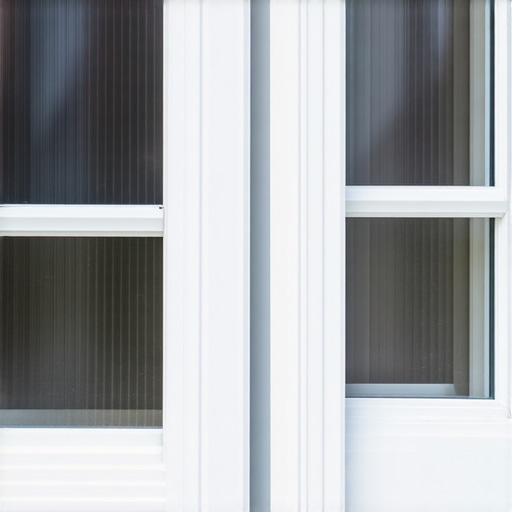
The Chalky Reality of Aged Fenestration
Most homeowners look at a chalky, pitted aluminum frame and assume the unit has reached its terminal life. As a glazier with twenty-five years on the job, I see a surface that has lost its protective passivation layer. Aluminum is a remarkable building material because of its strength-to-weight ratio, but it is a metabolic metal that reacts constantly with oxygen and environmental pollutants. When you see that white, powdery residue, you are looking at aluminum oxide. It is not just an aesthetic issue: if left unchecked, this oxidation can lead to deep pitting that compromises the structural integrity of the sash and the glazing bead.
A homeowner once called me in a panic because their new windows were ‘sweating.’ I walked in with my hygrometer and showed them the humidity was 60 percent. It wasn’t the windows; it was their lifestyle choices combined with the thermal conductivity of the old aluminum frames. The metal was so cold compared to the interior air that it reached the dew point instantly. I had to explain that while we could restore the shine to those frames, the lack of a thermal break meant the physics of condensation would remain. This illustrates a key point in our trade: a window is a thermal bridge. If that bridge is made of solid aluminum, it is a highway for heat transfer.
“Installation is just as critical as the window performance itself. A high-performance window installed poorly will fail.” AAMA Installation Masters Guide
The Science of Surface Degradation
To understand how to restore the shine, we must understand why it left. Mill-finish aluminum or even anodized aluminum undergoes a process where the surface reacts with water and oxygen. In coastal environments, salt spray accelerates this into galvanic corrosion. The ‘window cleaner’ you buy at the grocery store is designed for glass, which is non-porous and chemically inert. It does nothing for the porous, oxidized surface of the metal frame. In fact, many ammonia-based cleaners can actually accelerate the dulling of aluminum if not rinsed properly.
When we talk about restoration, we are talking about mechanical and chemical resurfacing. We have to strip away the oxidized layer to reveal the stable metal beneath. This requires a level of precision that most ‘caulk-and-walk’ contractors don’t possess. You cannot simply paint over oxidation. If you do, the paint will peel within a season because the substrate is unstable. You are essentially painting over dust.
Step-by-Step Restoration Protocol
First, we address the debris. You must clear the weep hole. These are the small outlets at the bottom of the frame that allow water to exit the sill pan. If these are clogged with oxidation runoff, water backs up and rots your rough opening. Once the drainage is clear, the cleaning begins. I recommend a pH-neutral detergent to remove organic soil, followed by a specialized aluminum restorer. For heavy pitting, I use a fine-grade abrasive pad, but never steel wool. Steel wool leaves behind microscopic carbon steel filaments that will rust and create ‘tea staining’ on your aluminum. Use synthetic pads or stainless steel wool if you must.
After the mechanical cleaning, a metal polish or a protective wax is applied. In the trade, we often use a fluoropolymer coating or a clear-coat sealant to prevent oxygen from reaching the surface. This is the only way to maintain the shine. Without a sealer, the aluminum will begin to oxidize again within weeks of being exposed to humidity.
Thermal Performance and the Southern Climate
If you are in a hot climate like Texas or Florida, your aluminum frames are likely absorbing a massive amount of solar radiation. Aluminum is an excellent conductor. In these regions, the Solar Heat Gain Coefficient (SHGC) is the metric that matters most. Even if your frames are shiny and restored, they are still pulling heat into the building envelope. This is why we often discuss the transition from restoration to the decision to replace windows.
Modern aluminum windows are ‘thermally broken.’ This means there is a polyamide or polyurethane barrier between the interior and exterior halves of the frame. This break stops the conductive heat flow. If your frames are solid metal, you are fighting a losing battle with your air conditioning bill. While a window repair can fix a broken sash or a cracked glazing bead, it cannot change the laws of thermodynamics. In the South, you want a Low-E coating on Surface #2 of the glass to reflect heat outward before it ever enters the house.
“The air leakage rate and thermal transmittance of a fenestration product are heavily dependent on the integrity of the frame seals and the precision of the assembly.” NFRC Performance Standards
The Math of Window Repair vs. Replacement
I often have to talk clients out of expensive ‘magic’ coatings that promise to make old aluminum windows as efficient as triple-pane units. It is a lie. The ROI on window replacement is often measured in decades, but the ROI on comfort is immediate. If your muntin bars are rattling and your shim points have shifted, the air infiltration will negate any cleaning you do. Air leakage is the silent killer of energy efficiency. If you can feel a breeze coming through the rough opening or the meeting rail, no amount of metal polish will lower your utility bill.
However, if the windows are structurally sound, restoration is a viable way to boost curb appeal without the five-figure cost of a full tear-out. A restored frame, combined with a professional glass cleaning, can make a forty-year-old house look modern. Just remember that maintenance is a cycle, not a one-time event. You should be inspecting your flashing tape and drip caps annually to ensure that while the window looks good, the wall behind it stays dry.
Final Glazier’s Advice
Do not trust a contractor who says they can ‘restore’ your windows with a quick spray. Real restoration involves cleaning the sill pan, ensuring the weep holes are functional, and mechanically removing the oxidation from every sash. It is tedious work, but it is the only way to protect the aluminum. If the pitting is deep enough that you can’t see the bottom of the craters, the metal is compromised. At that point, stop spending money on cleaners and start looking at high-quality vinyl or fiberglass replacements that offer better thermal resistance. [HowTo Schema] “