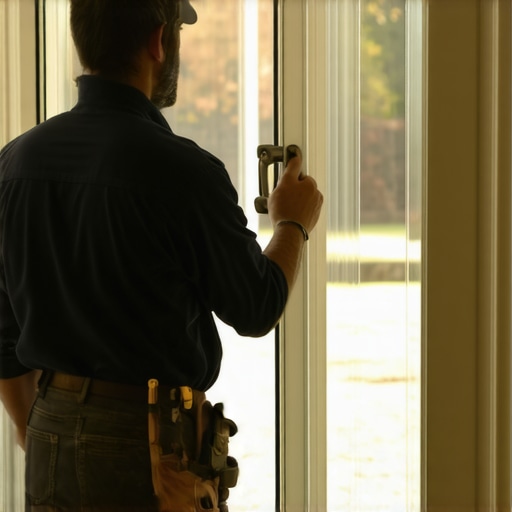
The Mechanical Reality of the Sliding Glass Door Drag
You pull the handle. It moves an inch, then grinds. The sound of high-pile carpet being shredded by a three hundred pound slab of tempered glass is enough to make any homeowner wince. As a master glazier with over twenty-five years in the field, I have seen this thousands of times. Usually, the homeowner thinks the house has settled or the door is too big for the opening. In reality, it is often a simple failure of the tandem roller assembly or a total lack of maintenance in the lower track. When a door drags on the carpet, you are not just fighting friction; you are wearing out the weatherstripping and compromising the thermal envelope of your home. If that door is not sitting square in the frame, your U-factor is irrelevant because the air infiltration around the perimeter will be massive.
The Narrative Matrix: A Lesson in Subfloor Integrity
I recall a specific job in a suburb of Chicago during a particularly brutal February. I pulled a vinyl sliding window and its matching patio door out of a house where the owner complained of a dragging sash. When I got the frame out, the header and the subfloor were completely black with rot. Why? The previous installer relied on the nailing fin instead of proper flashing tape and a dedicated sill pan. Water had been wicking through the carpet and into the wood for five years. The door was dragging because the floor had literally collapsed by half an inch. This is why we do not just caulk and walk. We look at the structural rough opening. If the foundation for your fenestration is mush, the most expensive glass in the world will not save you. Proper window repair starts with verifying that the structure is actually holding the unit square.
“Installation is just as critical as the window performance itself. A high-performance window installed poorly will fail.” – AAMA Installation Masters Guide
The Anatomy of the Tandem Roller
To understand the fast fix, you have to understand what is happening inside the bottom rail. Most modern sliding doors sit on two sets of tandem rollers. These are typically steel or nylon wheels housed in a metal carriage. Over time, hair, dust, and carpet fibers get wound around the axle. This increases the diameter of the wheel and creates friction. Eventually, the bearings fail. When they fail, the carriage drops, and the bottom rail of the door makes contact with the track or the carpet. To fix this, you need to locate the adjustment screws. These are usually hidden by small plastic plugs on the interior or exterior face of the bottom rail. By turning these screws, you are moving the carriage relative to the sash. Turning clockwise usually raises the door. This is the fast method to get clearance over the carpet, but it is only a bandage if the rollers are actually shot. If you hear a click-clack sound, the wheels are flat-spotted and need replacement.
The Thermal Logic of the Threshold
In cold climates like the one we are discussing, the threshold of a sliding glass door is a major thermal bridge. The metal track conducts cold directly from the outside to the inside. If the door is dragging on the carpet, it often means the weatherstripping is being crushed or bypassed. This allows cold air to pour in, creating a localized dew point where moisture in the air condenses on the cold metal. This moisture then drips onto the carpet, leading to mold growth. When we replace windows or doors in these zones, we focus on the U-factor. A lower U-factor means the assembly is better at keeping heat inside. We look for warm-edge spacers between the glass panes to prevent the edges from getting cold enough to sweat. If your door is dragging, you are losing that seal, and your heating bill is paying for it. You want a Low-E coating on Surface #3 to reflect your interior furnace heat back into the room rather than letting it escape through the glass.
“Water penetration is the single most common cause of window and door assembly failure.” – ASTM E2112 Standard Practice for Installation of Exterior Windows
The Fast Fix Protocol: A Step-by-Step Guide
First, clear the area. Use a high-quality window cleaner to scrub the entire track. Do not use grease or heavy oils; they attract dirt and turn into a grinding paste. Use a dry silicone spray instead. Next, find those adjustment holes. Use a long-handled screwdriver to reach the screw. You want to raise both sides equally. I usually tell people to count the turns. Three turns on the left, three turns on the right. Once you have clearance, check the reveal. The reveal is the gap between the door and the side jamb. If the gap is wider at the top than the bottom, your door is out of square. Adjust one side higher to compensate. This is a common trick used during window repair to make an old unit functional again. If the door still drags after being fully raised, you likely have a bowed header or a crown in the subfloor. At that point, you are looking at a full-frame replacement.
Maintenance and the Role of the Window Cleaner
A professional window cleaner does more than just make the glass clear. They should be inspecting the weep holes. Weep holes are small openings in the exterior track designed to let water escape. If these are clogged with debris, water backs up and sits against the rollers, rusting them out prematurely. Part of the fast method for maintaining a door is ensuring these holes are clear. Use a small wire or a can of compressed air to blow them out. When the track is clean and the rollers are adjusted, the door should move with the touch of a single finger. If you have to use your body weight to slide the door, you are putting a lateral load on the frame that it was never designed to handle. This can lead to the glass cracking or the seal failing, which leads to that foggy look between the panes known as a blown IG unit (Insulated Glass).
When to Stop Repairing and Start Replacing
There comes a point where the fast fix is no longer viable. If you have adjusted the rollers to their maximum height and the door still hits the carpet, the rollers are either completely collapsed or the track itself is deformed. When you replace windows or doors, you are not just buying new glass; you are buying a new mechanical system. Modern fiberglass frames offer incredible stability because they do not expand and contract like vinyl does. This means the rollers stay aligned and the seals stay tight for decades. In a cold climate, triple-pane glass with an Argon gas fill is the gold standard. The gas acts as an insulator, slowing down the transfer of heat. If your current door is a single-pane aluminum unit from the 1970s, no amount of roller adjustment will make it energy efficient. It is time to upgrade to a unit that manages the rough opening properly.