Unveiling the Invisible Performance of Your Glazing
As a Master Glazier with over a quarter-century in the field, I have seen the industry shift from simple single-pane wood sashes to complex multi-layered insulated glass units (IGUs). One of the most frequent complaints I encounter involves homeowners who feel their rooms are too cold in February or stiflingly hot in July, despite having modern-looking glass. They often suspect they were sold a bill of goods. To establish the baseline of any investigation, I rely on physics, not marketing brochures. Before we discuss whether you need to replace windows or if a simple window repair will suffice, we must verify what is actually inside your glass. A homeowner once called me in a panic because their new windows were ‘sweating.’ I walked in with my hygrometer and showed them the humidity was 60%. It wasn’t the windows; it was their lifestyle choices regarding ventilation. However, that incident highlights a critical truth: you cannot manage what you do not measure.
“Installation is just as critical as the window performance itself. A high-performance window installed poorly will fail.” – AAMA Installation Masters Guide
The Science of the Lighter Flame Test
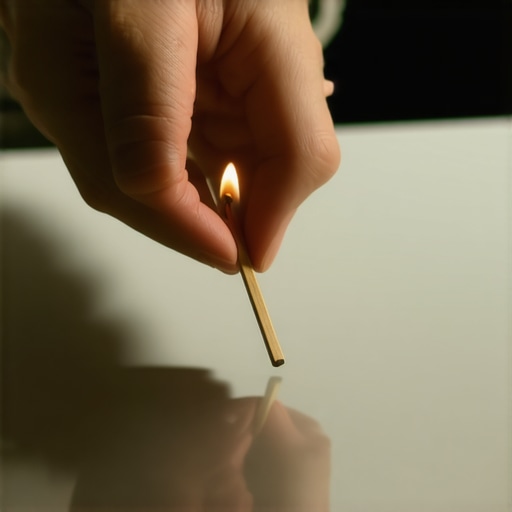
The ‘Lighter Flame’ trick is a diagnostic staple for any specialist worth their salt. To perform it, hold a small flame—from a lighter or a match—about two inches away from the interior surface of the glass at night or when it is dark outside. Look at the reflections of the flame in the window. In a standard double-pane IGU, you will see four distinct reflections. Each reflection corresponds to one of the four surfaces of the glass. Surface #1 is the exterior face, Surface #2 is the inner face of the outer pane, Surface #3 is the outer face of the inner pane, and Surface #4 is the interior face you can touch from your living room. In a clear, uncoated window, all four flames will be the same yellow or amber color. However, if your glass has a Low-E (low-emissivity) coating, one of those flames will be a noticeably different color—often purple, green, or a deep blue-pink hue. This color shift occurs because the metallic oxide layers of the coating interfere with the light spectrum of the reflection.
Why the Surface Position Matters
Where that colored flame appears tells me exactly how your window was designed to function. For those in cold northern climates like Chicago or Minneapolis, the primary enemy is heat loss. In these regions, we prioritize the U-Factor, which measures the rate of non-solar heat loss. We typically want the Low-E coating on Surface #3. This placement allows the solar heat to enter the home during the day but reflects the long-wave infrared radiation (your furnace’s heat) back into the room. If you see the third flame change color, your window is optimized for heating seasons. Conversely, in the scorching heat of the South, we battle Solar Heat Gain Coefficient (SHGC). In these environments, the coating should ideally be on Surface #2. This reflects the sun’s radiant energy back toward the exterior before it can even pass through the secondary pane of glass, keeping the interior cool. If you are paying a window cleaner to scrub away the grime only to find the room still feels like an oven, the lighter test might reveal that your coating is on the wrong surface for your climate, or worse, non-existent.
The Role of Low-Emissivity Physics
Low-E is not just a tint; it is a sophisticated microscopic layer of silver or other low-emissive metals. When we talk about “Glazing Zooming,” we are looking at the molecular level where these coatings reflect long-wave infrared energy. This is the energy produced by heat sources. By reflecting this energy, the glass maintains a temperature closer to the interior air temperature, which significantly reduces the dew point at the glass surface. This is why high-quality coatings prevent that annoying condensation that leads to mold on the glazing bead or the sash. If your lighter test shows four identical flames, you are essentially looking at a thermal hole in your wall. No amount of window repair can add a Low-E coating to existing glass; at that point, you must consider an IGU replacement or replace windows entirely to achieve modern efficiency standards.
“Standard Practice for Installation of Exterior Windows, Doors and Skylights requires a continuous air and water barrier transition between the window frame and the wall opening.” – ASTM E2112
Decoding the NFRC Label
While the lighter trick is a great field test, it should be validated by the National Fenestration Rating Council (NFRC) labels found on new units. The U-Factor is the most critical number for thermal resistance. A lower U-Factor, such as 0.25 or lower, indicates superior insulation. SHGC is equally vital; a rating of 0.20 is excellent for blocking heat in the South, while a 0.40 might be preferred in the North to allow for passive solar heating. We also look at Visible Transmittance (VT). If your VT is too low, the room will feel dark, like you are living in a cave. Balancing these numbers requires understanding the rough opening tolerances and ensuring the frame material, whether vinyl, fiberglass, or wood, can support the weight of heavy triple-pane units if you decide to go that route.
The Mechanics of Installation Integrity
A high-performance glass package is useless if the air is whistling through the rough opening. During installation, we use shims to perfectly level the sash within the frame, ensuring the weatherstripping compresses evenly. We must also ensure the weep holes are clear; these are the small valves in the bottom of the frame that allow moisture to escape. If a window cleaner or painter accidentally clogs these with debris or caulk, water will back up into the sill pan and eventually rot your subfloor. This is why I have no patience for installers who rely solely on flashing tape to hide a poorly fitted window. Proper water management follows the shingle principle: every layer must shed water to the layer below it and eventually to the exterior. Whether you are dealing with a simple seal failure or a total house overhaul, understanding the physics of your glass—verified by a simple lighter—is the first step toward a comfortable, efficient home. Don’t buy into the marketing hype of ‘krypton-filled miracle glass’ without checking the U-Factor and SHGC numbers that actually match your regional requirements.