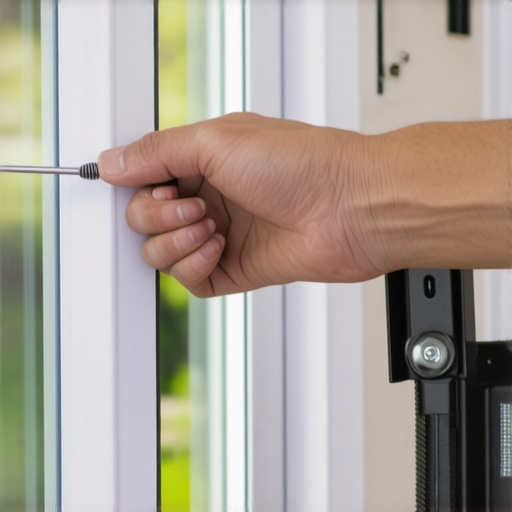
A sliding screen door that jumps the track or refuses to budge is not just a nuisance; it is a symptom of mechanical neglect that can eventually lead to structural degradation of your entire patio door assembly. In my 25 years as a master glazier, I have seen homeowners resort to brute force, effectively shearing off the nylon rollers and bending the thin aluminum extrusions that make up the screen frame. Most people assume they need to replace windows or entire door units when a simple 30-second adjustment to the tension system would restore the unit to its original factory specifications. I pulled a vinyl window and patio door out of a house in a humid coastal region recently, and the subfloor under the threshold was completely black with rot. Why? The previous installer ignored the proper flashing tape and sill pan integration, but the immediate catalyst was a screen door that had been forced so many times it warped the track, allowing water to pool and bypass the weep holes. This is the reality of neglecting the small components of your home’s fenestration system. When we talk about window repair, we are often talking about managing the physics of movement and the tolerances of the rough opening. A screen door relies on two spring-loaded roller assemblies, usually located at the top and bottom of the vertical stiles. These rollers are designed to hover over the track, providing just enough clearance to prevent friction while maintaining enough pressure to keep the door seated. If the tension is too loose, the door derails; if it is too tight, the friction will grind the rollers into flat spots.
“Installation is just as critical as the window performance itself. A high-performance window installed poorly will fail.” – AAMA Installation Masters Guide
Before you call a window cleaner or a contractor for an expensive replacement, you must understand the tool at hand. You will typically find a small adjustment screw located on the face or the edge of the screen frame, just above the roller. Turning this screw clockwise will retract the roller, increasing the tension by pulling the frame closer to the track. Conversely, a counter-clockwise turn will extend the roller, lowering the tension. In a hot climate like Texas or Florida, where the Solar Heat Gain Coefficient (SHGC) is a constant battle, many homeowners install heavy solar screens. These screens add significant weight to the frame, requiring a more precise tension adjustment to prevent the springs from bottoming out. While we focus on the glass Surface #2 for Low-E coatings to reflect solar radiation, the physical operation of the door is what allows for natural ventilation when the ambient temperature drops. To perform the 30-second adjustment, first clear any debris from the track. A window cleaner might use a vacuum, but I prefer a stiff brush to ensure the weep holes are not obstructed. Once the track is clear, use a #2 Phillips head screwdriver to turn the adjustment screw in small increments. You want the screen to glide with a single finger of pressure. If the door feels ‘mushy,’ you have too much play in the spring. If it feels ‘gritty,’ the roller is likely pressing too hard against the aluminum rail.
“Standard practice for installation requires that all operable units be tested for smooth movement and proper engagement of all locking mechanisms prior to final seal.” – ASTM E2112
In Northern climates where heat loss and condensation are the primary enemies, the screen door often stays in place during the winter. This is a mistake. The tension on those springs, combined with the thermal expansion and contraction of the aluminum frame, can cause the rollers to seize. When the sash of your main door expands in the summer heat, a poorly adjusted screen can actually score the vinyl or wood finish of the primary frame. This is why understanding the ‘Rough Opening’ tolerances is vital. Even a perfectly square door can be thrown out of alignment if the header of the house settles. If your screen door continues to pop out after adjustment, it may be that the door frame itself is no longer plumb. You can check this by measuring the diagonals of the screen; if they aren’t equal, the frame is racked. In such cases, window repair might involve more than just a screwdriver; you might need to shim the track or replace the rollers entirely if they have developed flat spots. The glazing bead on the screen holds the mesh in place, and if the frame is under constant stress from improper tension, that bead can pop out, leading to sagging mesh that further interferes with the operation. Remember, we are managing a hole in the wall. Every component, from the muntin bars on your windows to the rollers on your screen, must work in harmony to maintain the integrity of the building envelope. Do not accept a ‘caulk-and-walk’ solution where a technician simply sprays lubricant on a mechanical problem. Proper tension is the only way to ensure longevity. If you are in a coastal area, ensure your hardware is stainless steel to prevent the salt air from corroding the tension springs. A little bit of technical knowledge prevents a massive repair bill down the line. Keep your tracks clean, your rollers adjusted, and your weep holes clear. That is the glazier’s way.