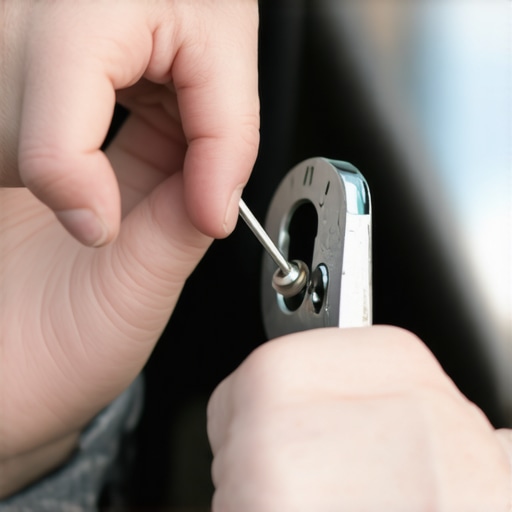
The Mechanical Crisis of the Frozen Casement
You go to crank open your casement window on the first fresh day of spring, and it happens. The handle resists. You apply a bit more torque, and you hear that sickening ‘grind-slip-pop’ of metal teeth surrendering their structural integrity. As a glazier who has spent over two decades in the field, I can tell you that a stubborn window crank is rarely a sign that you need to immediately replace windows, but it is a loud scream for maintenance that you have likely ignored for years. Windows are mechanical systems, not just static panes of glass. They are subject to the same laws of friction and thermal expansion as a car engine, yet they are often treated with total neglect until the sash is stuck halfway open during a thunderstorm.
A homeowner called me in a panic because their new windows were ‘sweating’ and they couldn’t open them to vent the house. I walked in with my hygrometer and showed them the humidity was 60%. It wasn’t the windows; it was their lifestyle choices—too many plants and no ventilation—coupled with the fact that they hadn’t maintained the operator hardware, so they couldn’t even crack the sash to let the moisture out. They thought they needed a full window repair or a total replacement, but what they really needed was a lesson in mechanical physics and a can of dry lubricant.
“Installation is just as critical as the window performance itself. A high-performance window installed poorly will fail, and a well-installed window that is poorly maintained will follow suit.” AAMA Installation Masters Guide
The Anatomy of Resistance: Why the Crank Fails
Before we jump into the two-minute fix, you need to understand what is happening inside that metal housing. Most casement windows use a worm gear operator. When you turn the handle, it rotates a worm gear which then drives a larger gear attached to the arm. This arm pushes the sash along a track. In cold climates like Minneapolis or Chicago, we deal with the ‘U-Factor’ of the glass and the contraction of the frame. When it is ten degrees below zero, the vinyl or wood of your sash can contract differently than the metal track. This creates a binding force. If you have ever tried to force an operable sash when the weatherstripping is frozen to the frame, you are essentially asking a small zinc gear to move a fifty-pound dead weight. The gear will lose that fight every time.
We also have to consider ‘Sash Sag.’ Over time, the weight of the Insulated Glass Unit (IGU) can cause the sash to drop a fraction of an inch within the rough opening. This misalignment means the arm of the crank is no longer pushing in a straight line; it is pushing at an upward angle, creating immense friction on the glazing bead and the tracks. If you ignore this, the gear teeth will eventually strip, leaving you with a handle that spins freely while the window remains shut. This is where most people give up and call a pro to replace windows, but if the frame is square and the shim is still in place, we can usually save it.
The 2-Minute Fix: A Master Glazier’s Protocol
This fix assumes the gears aren’t already stripped to dust. If you feel resistance, stop turning. Step one: Open the window just an inch if possible. Grab a high-quality window cleaner—one without ammonia if you have specialized coatings—and spray down the tracks and the hinges. Do not just spray the gear housing. Most of the resistance comes from the friction hinges at the top and bottom of the sash. Dirt, dead flies, and wind-blown grit act like sandpaper in those tracks. Clean it out with a stiff brush until the metal shines.
Step two: The Lubrication. This is where most homeowners fail. They reach for a heavy grease or, heaven forbid, a water-displacing spray that eventually gums up. In a cold climate, you want a dry silicone spray or a T-9 waterproof lubricant. These don’t attract dust. Spray the worm gear where the handle enters the housing and the pivot points on the arm. Move the crank back and forth in small increments to work the lubricant into the teeth. You are looking to restore the ‘coefficient of friction’ to its original factory state.
“Standard Practice for Installation of Exterior Windows, Doors and Skylights requires that all mechanical components be verified for operational clearance and lubricated according to manufacturer specifications to ensure long-term performance.” ASTM E2112
When the Fix Fails: Identifying Stripped Gears
If you perform the cleaning and lubrication and the handle still spins without moving the sash, your operator is ‘toast.’ You aren’t doing a window repair anymore; you are doing a component replacement. To check, remove the set screw on the handle and pull it off. Inspect the splines (the little ridges on the post). If they are rounded off, the handle is the problem—an easy five-dollar fix. If the splines are sharp but the post itself doesn’t turn when the internal gears move, the internal worm gear has detached. At this point, you need to unscrew the operator from the sill. This requires removing the trim or the wooden stool in some cases. Make sure you check the weep hole while you are down there; if the operator was sitting in water because of a clogged weep hole, that is why it rusted out in the first place.
Thermal Logic and Sash Integrity
In the North, we prioritize the U-Factor, which measures the rate of heat loss. A window crank that doesn’t pull the sash tight against the weatherstripping is an energy disaster. Even a 1/16th inch gap can allow enough air infiltration to negate the benefits of your triple-pane, Argon-filled glass. When you finish your 2-minute fix, look at the sash as it closes. Does it pull in evenly? Does the locking handle engage without forced pressure? If you have to ‘he-man’ the lock, your sash is misaligned. You might need to adjust the hinges or even re-square the unit with a composite shim. A window that is easy to operate is a window that stays energy efficient. Don’t let a bit of grit in the track lead to a three-hundred-dollar heating bill.