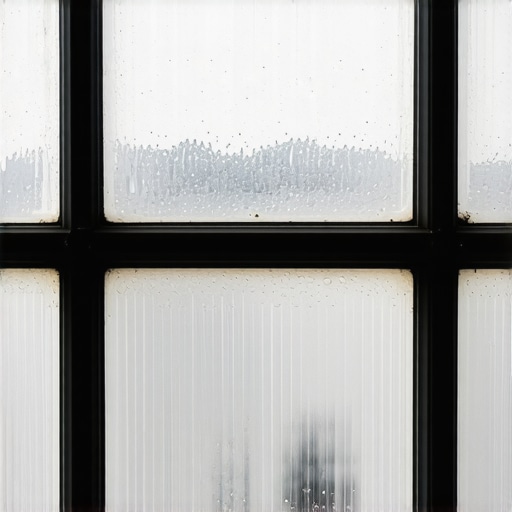
The Condensation Crisis: A Narrative of Failure
A homeowner called me in a panic because their new windows were ‘sweating.’ I walked in with my hygrometer and showed them the humidity was 60%. It wasn’t the windows; it was their lifestyle, specifically a lack of ventilation. However, when that moisture isn’t on the surface of the glass but is trapped between the panes, the conversation shifts from humidity control to mechanical failure. As a glazier with over two decades in the field, I have seen thousands of these cases. Most people think a window is a static object, but an Insulated Glass Unit (IGU) is a dynamic pressure vessel. When the seal fails, you aren’t just losing a view; you are losing the thermal barrier that protects your home from the relentless movement of heat.
The Physics of the IGU: Understanding Solar Pumping
To understand why seals fail, we must look at the science of solar pumping. Every single day, your windows are subjected to a cycle of thermal expansion and contraction. When the sun hits the glass, the gas (usually Argon or Krypton) between the panes heats up and expands. This creates internal pressure that pushes against the primary seal, typically made of polyisobutylene (PIB). At night, the temperature drops, the gas contracts, and the glass panes are sucked inward. This constant movement is what we call ‘solar pumping.’ Over time, this mechanical stress can cause the sealant to develop microscopic fissures. [IMAGE_PLACEHOLDER] once the integrity of the PIB is compromised, outside air, which carries water vapor, is drawn into the dead air space. This is where the desiccant—the moisture-absorbing material inside your spacer bar—comes into play. It will soak up that moisture until it reaches its saturation point. Once that point is hit, the next time the temperature drops to the dew point, you get fogging.
“Installation is just as critical as the window performance itself. A high-performance window installed poorly will fail.” – AAMA Installation Masters Guide
The Primary Indicators: Fogging, Distortions, and Residues
The most obvious warning sign is permanent fogging or a ‘milky’ appearance inside the glass. If you try to wipe it away and realize it is between the panes, the seal is gone. But there are more subtle signs. If you see what looks like an oil slick or ‘Newton’s Rings’ in the center of the glass, the panes might actually be touching. This happens when the gas has leaked out entirely and the internal pressure has dropped so low that the glass bows inward. Another sign is the presence of white dust at the bottom of the sash. This is often the desiccant material itself breaking down and leaking out of the spacer bar. If you see this, your window is no longer providing any meaningful U-Factor benefit. You are effectively living with a very expensive, very heavy single-pane window.
Climate Logic: The Cold Front Attack
In cold climates like Chicago or Minneapolis, seal failure is an emergency for your energy bill. The U-Factor, which measures the rate of heat loss, is entirely dependent on that dead air space or gas fill. When the seal fails and the Argon escapes, the thermal resistance of the window drops significantly. This leads to a cold rough opening and a massive increase in convective heat loss. Furthermore, the condensation that forms inside a failed IGU can freeze, causing the ice to expand and further rip the glazing bead away from the frame, potentially leading to wood rot in the sash or frame. For these environments, a warm-edge spacer is non-negotiable to reduce the temperature differential at the edge of the glass, which is where most seal failures begin.
“The NFRC 700 standard ensures that the fenestration product’s performance is accurately measured, but even the best-rated window cannot overcome the physical degradation of a failed secondary seal.” – NFRC Performance Standards
The Role of the Window Cleaner and Proper Maintenance
Interestingly, a professional window cleaner is often the first person to diagnose a seal failure. They see the glass at a level of detail that homeowners ignore. If your cleaner tells you they can’t get a smudge off, listen to them. At this stage, you have two real options: window repair via IGU replacement or to replace windows entirely. While some companies offer ‘defogging’ services where they drill a hole and spray a chemical, I consider this a ‘caulk-and-walk’ tactic. It does not restore the Argon gas, and it does not fix the structural integrity of the seal. It is a cosmetic band-aid on a structural wound. If the frames are still in good condition—meaning the sill pan is dry and there is no rot—a simple IGU swap is the most cost-effective solution. However, if the failure is due to a warped frame or a poorly leveled shim during the original installation, the only fix is a full-frame replacement.
The Math of Replacement: Is it Worth It?
Homeowners often ask about the ROI of replacing windows with failed seals. If you are looking at a single failed unit, the comfort and clarity are worth the cost. However, do not believe a salesman who tells you that new windows will pay for themselves in three years through energy savings. The real value is in protecting the structural integrity of your rough opening and maintaining the weep hole functionality. A failed seal allows moisture to sit in the glazing pocket, which is the fastest way to destroy a wood or even an aluminum-clad frame. When you choose to replace, look for units with a high-quality secondary seal of silicone or polysulfide, which provides the structural strength to hold the IGU together while the PIB handles the gas retention. Don’t buy the marketing hype; look at the cross-section of the spacer system and the thickness of the sealant bed. That is where the longevity of your window is decided.