The Aesthetic Decay of Fenestration Systems
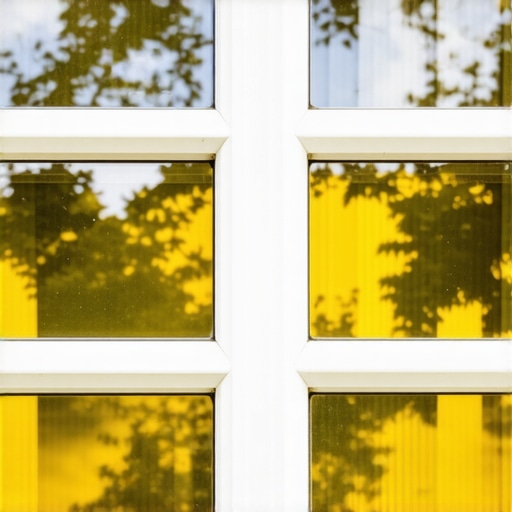
When a homeowner notices their once-pristine white window frames or the glass itself taking on a sickly, jaundiced hue, the immediate reaction is often to reach for a stronger window cleaner. However, as a glazier who has spent nearly three decades inspecting the structural integrity of insulated glass units (IGUs), I can tell you that yellowing is rarely a surface issue. It is a symptom of chemical failure, either within the uPVC compounding or deep inside the sealed glazing unit. This isn’t just about curb appeal; it is a warning sign that the thermal barrier of your home is compromised.
I once sat across from a homeowner who had been promised a lifetime warranty by a high-pressure salesman selling what he called aerospace-grade vinyl. Three years after the installation, every south-facing window looked like it had been in a smoking room for twenty years. I had to be the one to break the news that the manufacturer had likely used a low-grade PVC mix with insufficient titanium dioxide. I explained that the return on investment for those windows had evaporated because the structural integrity of the frames was now in question. The sun hadn’t just changed the color; it had altered the molecular bond of the material.
The Chemistry of Yellowing Frames
Most modern windows utilize unplasticized Polyvinyl Chloride (uPVC). To keep this material white and rigid under intense UV radiation, manufacturers must include stabilizers. The gold standard is titanium dioxide (TiO2), a white pigment that acts as a physical sunscreen for your windows. When a manufacturer cuts costs, they reduce the TiO2 content or use inferior organotin stabilizers. Over time, the UV rays trigger a dehydrochlorination process in the polymer. This chemical reaction breaks the carbon chains, leading to a yellowed appearance and, eventually, brittleness that can cause the glazing bead to snap or the sash to warp.
“Performance of fenestration products is not solely dependent on the glass type but is heavily influenced by the chemical stability of the framing members and the sealant’s resistance to ultraviolet radiation.” – AAMA/WDMA/CSA 101/I.S.2/A440-11
If the yellowing is occurring on the frame, window repair is often impossible. You cannot simply paint over uPVC without risking further heat absorption and expansion issues. In these cases, the only viable solution is to replace windows with high-quality, high-solar-reflectance frames that are rated for your specific climate zone.
Internal Discoloration: The Failed Seal
Sometimes the yellowing isn’t on the frame, but inside the glass. This is the hallmark of a failed IGU. Inside the spacer bar that separates the two panes of glass is a desiccant, a material designed to absorb any residual moisture trapped during manufacturing. If the primary seal (usually Polyisobutylene or PIB) or the secondary seal (Silicone or Polysulfide) fails, moisture enters the unit. This moisture reacts with the desiccant and any outgassed chemicals from the spacer, creating a yellowish, oily film on the inner surfaces of the glass. This is why your window cleaner can’t touch the stain; it is locked inside the vacuum.
The South/Hot Climate Logic: Managing SHGC
In warmer, sun-drenched regions, the enemy is Solar Heat Gain. If your windows are turning yellow, they are likely absorbing far more radiant energy than they were designed to handle. For homes in these climates, the Solar Heat Gain Coefficient (SHGC) is the most critical metric on the NFRC label. You want a low SHGC, typically achieved by placing a Spectrally Selective Low-E coating on Surface #2 (the inner face of the outer pane). This reflects the long-wave infrared radiation back outside before it can pass through the air gap and heat up the interior sash components.
Using a thermally broken frame is also essential. Even if the PVC is high quality, the heat can build up in the rough opening, causing the shims to shift and the sill pan to experience thermal stress. A window that has yellowed is often a window that is running too hot, leading to the eventual failure of the weep holes as the frame expands and contracts excessively, potentially trapping water and inviting rot into the header and jack studs.
Decoding the NFRC Label for Replacement
When you reach the point where window repair is no longer cost-effective, you must understand the numbers. Do not let a salesman distract you with talk of triple-pane efficiency if you live in a climate where the temperature rarely drops below freezing. Instead, focus on the U-Factor and the Visible Transmittance (VT). A high VT is desirable to maintain natural light, but it must be balanced against the SHGC to ensure you aren’t turning your living room into a greenhouse.
“The durability of the perimeter seal in an insulating glass unit is the primary factor in determining the service life of the window system.” – ASTM E2112 Standard Practice
The Professional Installation Factor
Even the most expensive, UV-stabilized window will fail if the installation is botched. A common mistake I see is the improper use of flashing tape or the omission of a proper sill pan. If water cannot exit the assembly through the designated weep holes because the window was set too deep or the caulking was applied over the drainage path, the standing water will accelerate the degradation of the seals. This moisture-rich environment, combined with heat, is a catalyst for the chemical yellowing we see in failed units. When you replace windows, the installer must ensure the rough opening is square, level, and plumb, using proper shims to allow for the natural expansion of the frame without putting stress on the glass seals.
Final Verdict on Yellowing
If your windows have turned yellow, the chemical bond of the material has been compromised. While you can attempt a window repair by replacing just the IGU (the glass unit), if the frame itself is yellowing and becoming brittle, you are fighting a losing battle. The most effective path forward is a full-frame replacement using materials with proven UV resistance and a low SHGC to protect your home’s interior and the window’s own structural integrity for decades to come.”,”image”:{“imagePrompt”:”A close-up, high-detail macro shot of a weathered uPVC window corner showing distinct yellowing and slight cracking of the glazing bead, with a blurred background of a sunny suburban exterior to emphasize UV exposure.”,”imageTitle”:”Degraded Yellowing uPVC Window Frame Close-up”,”imageAlt”:”Close-up of a yellowed and brittle uPVC window frame showing signs of UV degradation and seal failure.”},”categoryId”:0,”postTime”:””}