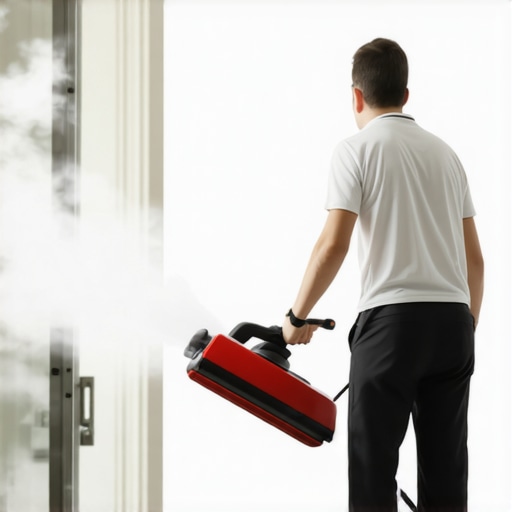
The Gritty Reality of Window Maintenance
As a master glazier who has spent nearly three decades diagnosing why windows fail prematurely, I can tell you that the most common culprit isn’t the glass or the frame material itself; it is the negligence of the sliding tracks. A sliding window or door is a mechanical system that relies on low-friction movement. When grit, pet hair, and airborne pollutants accumulate in the track, they act like a liquid sandpaper. Every time you cycle that operable sash, you are grinding down the rollers and the track profile. Eventually, the friction becomes so great that the sash begins to chatter or seize, leading homeowners to believe they need to replace windows when they actually just needed a professional-grade cleaning. Most people reach for a wet rag and some soap, but that only creates a slurry of mud that settles into the weep holes. To truly clear the path, we need to talk about the physics of steam cleaning.
“Installation is just as critical as the window performance itself. A high-performance window installed poorly will fail.” – AAMA Installation Masters Guide
The Condensation Crisis Narrative
A homeowner called me in a panic because their new windows were ‘sweating’ and the tracks were filled with a thick, black sludge. I walked in with my hygrometer and showed them the humidity was 60%. It wasn’t a failure of the insulated glass unit or the primary seal; it was their lifestyle and a total lack of maintenance. They had been cooking and showering without ventilation, and all that moisture was migrating to the coldest surface in the room: the window track. Because the tracks were packed with grime, the weep holes—those small exits designed to let water escape to the exterior—were completely plugged. The water had nowhere to go, so it sat in the sill pan, feeding mold and causing the sash to stick. I didn’t sell them new windows; I taught them how to manage their indoor air quality and how to use vapor pressure to clear those drainage paths. This is a common story in my trade, where the ‘window cleaner’ is often the first line of defense against rot and hardware failure.
The Anatomy of a Sliding Track
To understand why steam is superior, you have to understand the rough opening and the sill assembly. In a high-quality installation, the window sits on a sill pan. The track itself often has complex geometries—valleys and ridges designed to house rollers and provide a weather-tight seal when the sash is closed. The glazing bead holds the glass in place, but it’s the track that manages the water. When grime enters the equation, it doesn’t just sit on top; it works its way under the weatherstripping. This increases the operating force required to move the window. If you have to put your shoulder into opening a window, you are putting undue stress on the frame’s corner welds and the sash’s structural integrity. Using a steam cleaner allows us to reach temperatures that liquefy hardened grease and lift particulates without the use of caustic chemicals that could degrade the vinyl or the aluminum’s anodized finish.
The Physics of Steam Cleaning and Thermal Stress
In hot climates like Texas or Arizona, the Solar Heat Gain Coefficient (SHGC) is the number we watch. We want to reflect as much radiant heat as possible. However, the heat also bakes the grime in your window tracks into a ceramic-like crust. When using a steam cleaner, you are utilizing high-temperature water vapor to break the molecular bonds of this debris. But here is where the technical precision of a master glazier is required: you must be mindful of the glass. Modern windows often have a Low-E coating on Surface #2. While this is inside the insulated glass unit (IGU), the glass itself is sensitive to thermal shock. If you blast a cold window with 212-degree steam, you risk a stress crack. Always pre-warm the area or work on a day when the glass is already tempered by the ambient air. Focus the steam nozzle directly into the track, specifically targeting the weep holes. You will see the ‘mud’ exit through the exterior of the frame, which is exactly how the system was engineered to function.
“Proper water management in fenestration requires that all pathways to the exterior remains unobstructed by debris or sealant.” – ASTM E2112 Standard Practice
Step-by-Step Technical Execution
First, vacuum the track using a crevice tool to remove loose particulates. Do not skip this step; if you go straight to steam, you are just making hot mud. Next, identify your weep holes. These are the small rectangular openings on the exterior face of the bottom frame. If they are plugged, the steam will have nowhere to push the grime. Once the track is prepped, use a narrow detail nozzle on your steam cleaner. Move the nozzle at a rate of one inch per second. You will see the grime emulsify instantly. Follow immediately with a microfiber cloth to lift the suspended solids. Pay special attention to the interlocker—the part of the window where the two sashes meet. Grime here can prevent the window from locking properly, which compromises your home’s security and its thermal envelope. After cleaning, do not use WD-40. It is a solvent, not a long-term lubricant, and its oily residue will only attract more dust. Instead, use a dry silicone spray on the track to ensure the rollers glide without resistance.
When Maintenance Reveals the Need for Window Repair
Sometimes, cleaning the tracks reveals deeper issues. While you are in there with your steam cleaner, inspect the weatherstripping. If the poly-pile is flattened or missing, no amount of cleaning will stop the drafts. Check the rollers. If they are flat-spotted or rusted, they need a window repair specialist to swap them out. If you see standing water that refuses to drain even after the weep holes are cleared, your window might not be level. A window that has settled in the rough opening will have ‘back-slope,’ meaning water runs toward the interior rather than the exterior. This is a critical failure that requires more than a cleaner; it requires a glazier to shim the frame back into a square, level, and plumb position. Proper maintenance is the only way to catch these issues before they turn into a full-scale rot repair of your wall’s framing.
The Long-Term ROI of a Clean Window
Many homeowners are told they need to replace windows to save on energy bills. While new fiberglass or thermally broken aluminum frames offer better U-factors, the return on investment can take twenty years. Conversely, spending an hour twice a year with a steam cleaner costs almost nothing and can extend the life of your existing windows by decades. It preserves the seals, keeps the hardware functional, and ensures that the window’s thermal performance isn’t compromised by air leakage around a dirty, poorly-seated sash. In my professional opinion, a well-maintained twenty-year-old window will often outperform a brand-new, mid-grade window that has been neglected for five years. Focus on the mechanics of the system, and the system will take care of your comfort. Clean tracks mean a better seal, and a better seal means your HVAC system isn’t fighting the outside air. It is a simple equation of mechanical physics over marketing hype.