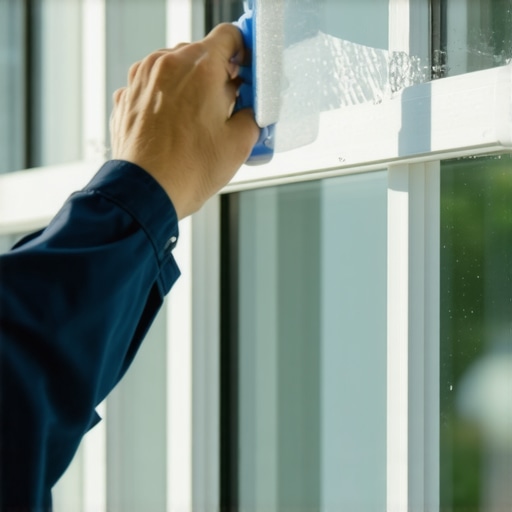
I have spent over twenty-five years staring through glass and the one thing I can tell you with absolute certainty is that most homeowners are one metal scraper away from a thousand-dollar mistake. As a master glazier, I have seen it all. I have seen high-rise curtain walls that leaked because of a single blocked weep hole and historic wood sashes that were ruined by someone with a heavy hand and a steel chisel. People often ask me what the most sophisticated tool in my kit is. They expect me to pull out a laser level or a thermal imaging camera. While I use those, my most valuable asset for a routine window cleaner or minor window repair job is a simple two-dollar plastic putty knife. This tool represents the difference between a professional touch and a ‘caulk-and-walk’ amateur who leaves behind a trail of scratched coatings and compromised seals.
“Installation is just as critical as the window performance itself. A high-performance window installed poorly will fail.” – AAMA Installation Masters Guide
A homeowner called me in a panic because their new windows were ‘sweating.’ I walked in with my hygrometer and showed them the humidity was 60 percent. It was not the windows; it was their lifestyle. They were running a humidifier in a sealed room during a Chicago winter. But as I inspected the units, I noticed something else. They had tried to clean the construction debris off the glass using a metal razor. They had already sliced through the soft Low-E coating on the interior surface of the glass. In their attempt to maintain the window, they had effectively neutralized the thermal efficiency of the unit. I had to explain that while the condensation was a humidity issue, the permanent scratches were a maintenance error that no amount of cleaning could fix. This is why the material science of your tools matters as much as the glass itself.
The Physics of the Plastic Edge
When you are performing a window repair or a deep clean, you are dealing with surfaces that are engineered at the molecular level. Modern glass is not just a slab of silica. It is a substrate for various metallic oxide layers designed to manage the Solar Heat Gain Coefficient (SHGC) and the U-Factor. In northern climates like Minneapolis or Chicago, the goal is often to keep heat inside. We look for a low U-Factor and we often place the Low-E coating on Surface 3. When you use a metal tool to pry at a Sash or remove a Glazing Bead, you risk creating a micro-fracture. Glass is incredibly strong under compression but weak under tension. A metal putty knife can create a tiny nick in the edge of the glass where it sits in the rabbit. When the temperature drops to ten below zero, the glass contracts. That tiny nick becomes a stress concentrator and suddenly, you have a crack spanning the entire pane. A plastic putty knife, being softer than the glass and the vinyl or wood frame, will deform before it can cause structural damage to the IGU (Insulated Glass Unit).
Managing the Weep Hole and the Sash
A window is effectively a hole in your thermal envelope that must manage water. Every operable window system is designed with the ‘Shingle Principle’ in mind. Water must always flow down and out. This is where the Weep Hole comes into play. Over time, these small exits become clogged with dust, spider webs, and debris. When a window cleaner ignores these, water backs up into the sill. If the water sits there long enough, it attacks the secondary seal of the IGU. This leads to the dreaded ‘blown seal’ where moisture gets trapped between the panes. I use my plastic putty knife to gently clear these channels. Because the tool is flexible, I can navigate the tight geometry of the sill pan without cracking the plastic housing. If you use a screwdriver or a metal blade, you risk puncturing the flashing tape or the internal gaskets, which leads to rot in the Rough Opening that you won’t see until the header is black with mold.
“The maintenance of fenestration products is essential to ensure that the performance characteristics of the unit are maintained over its service life.” – AAMA 609 & 610-09
Why You Should Repair Before You Replace Windows
There is a massive push in the industry to replace windows at the first sign of trouble. High-pressure salesmen will tell you that a drafty sash means you need an entirely new unit. This is rarely the case if the frame is structurally sound. Often, the issue is a failed weatherstrip or a misaligned Shim in the Rough Opening. A plastic putty knife is the perfect tool for non-destructive testing. I use it to feel for the compression of the bulb seal around the Operable sash. I use it to pop off the Glazing Bead to inspect the desiccant and the spacer. If the spacer is a ‘warm-edge’ variety, it is often made of a foam or thin-gauge stainless steel. Prying this with metal is a death sentence for the vacuum seal. By using plastic, I can often perform a window repair that costs fifty dollars in parts rather than five thousand dollars in replacement costs. We have to stop the cycle of ‘disposable’ architecture. A well-maintained wood window with a proper storm unit can last a century. A cheap vinyl replacement might only last fifteen years before the UV radiation makes the frame brittle and the corner welds start to fail.
The Thermal Logic of Cleaning
In cold climates, heat loss is the enemy. We want the glass to reflect long-wave infrared radiation back into the room. If a window is covered in a film of grease and atmospheric pollutants, the emissivity of the surface changes. While a dirty window might not seem like a thermal bridge, it can actually affect how the glass absorbs radiant heat. When a window cleaner uses the right tools, they are not just improving the view; they are maintaining the engineered performance of the glass. Using a plastic blade to remove bird droppings or paint overspray ensures that the thin-film coatings remain intact. If you scratch that coating, you create a cold spot. That cold spot becomes the first place where condensation forms. Once you have liquid water on the interior sash, you have the potential for mold growth and the degradation of the Muntin bars or the Glazing Bead. It is a chain reaction that starts with the wrong tool and ends with a structural failure.
Conclusion: The Professional Standard
The next time you approach a window for maintenance, leave the metal scraper in the truck. Respect the engineering that goes into the modern fenestration unit. Whether you are clearing out a Rough Opening during an installation or just doing a seasonal window repair on a sticky sash, the plastic putty knife is your best defense against accidental damage. It forces you to be precise. It prevents the marring of the finish. It protects the integrity of the seals that keep your home dry and energy-efficient. In an industry full of people looking for the fast fix, the professional knows that the right tool, no matter how humble, is the one that preserves the building’s integrity for the long haul.