The Science of Sliding Door Surface Maintenance
A sliding glass door is a major structural aperture, not just a simple piece of household furniture. When you see a scuff mark across that expansive pane, you are not just looking at a cosmetic blemish: you are looking at a material deposit or a surface abrasion on a highly engineered amorphous solid. As a master glazier with a quarter-century in the field, I have seen every possible way to mistreat a window. Most people approach a scuff with a bottle of generic window cleaner and a paper towel, but if you want to protect your investment, you need to understand the molecular interaction at play. Glass is incredibly hard on the Mohs scale, but the coatings we apply to it, like Low-E or solar tints, are far more vulnerable. Before you start scrubbing, you must determine if the mark is a deposit of foreign material, such as rubber from a shoe or plastic from a toy, or a true scratch that has physically displaced the silica lattice. For those in warmer climates like Texas or Florida, where the sun is your primary adversary, these large glass surfaces are often treated with specialized coatings. If you have a high-performance door, that scuff might actually be damage to a surface-applied film. This is why we focus on the Solar Heat Gain Coefficient (SHGC). In my professional experience, I have seen homeowners ruin thousands of dollars in glazing by using abrasive pads on Surface #2 or Surface #4 coatings.
The Narrative of the Hidden Humidity Crisis
A homeowner called me in a panic because their new windows were ‘sweating.’ I walked in with my hygrometer and showed them the humidity was 60%. It wasn’t the windows; it was their lifestyle: they had a massive aquarium and several humidifiers running in a tightly sealed house. I bring this up because what many people think is a ‘permanent scuff’ or a stain on their sliding glass door is often a symptom of an internal seal failure. If you see a hazy mark that you cannot feel with your fingernail on either side of the glass, you aren’t looking at a scuff: you are looking at ‘calcium bloom’ or mineralization between the panes. In the glazing industry, we call this a blown IGU (Insulated Glass Unit). When the desiccant in the spacer bar becomes saturated, moisture enters the air space and begins to etch the glass from the inside. At that point, no amount of window cleaner will help. You aren’t looking for a cleaning tip; you are looking to replace windows or at least the glass units themselves. This is a critical distinction that saves my clients hundreds of dollars in wasted cleaning supplies.
“Installation is just as critical as the window performance itself. A high-performance window installed poorly will fail to meet its energy and structural ratings.” – AAMA Installation Masters Guide
The Anatomy of the Sliding Door and the Rough Opening
To understand why scuffs happen, you have to look at the mechanical operation of the door. A sliding glass door consists of an operable sash that moves along a track within a frame. This frame is secured into the rough opening of your home. If the rough opening was not properly squared or if the header has sagged over time, the sash will begin to drag. This dragging often creates scuffs along the bottom rail or the glazing bead. When I perform a window repair, the first thing I check is the shim placement. If the door isn’t level, the weight of the tempered glass (which can exceed 100 pounds for a large door) will cause the rollers to fail. [IMAGE_PLACEHOLDER] When rollers fail, the metal or plastic housing of the sash starts to rub against the sill, creating those unsightly black scuff marks on the frame. To remove these from the frame itself, you need a non-polar solvent or a specialized melamine foam, but you must be careful not to strip the factory finish. If you have a vinyl frame, these marks can often be ‘burned’ into the material by friction. This is why proper maintenance of the track and weep holes is essential. Weep holes are the small gaps designed to let water escape the track: if they are clogged with debris or the remnants of your cleaning attempts, you are inviting rot into your subfloor and the sill pan.
The Math of Energy Efficiency: SHGC and U-Factor
In hot climates, the enemy is the sun’s radiant heat. We prioritize the Solar Heat Gain Coefficient (SHGC) over the U-Factor. U-Factor measures heat transfer from the air, but SHGC measures the solar radiation that passes through the glass. For a sliding glass door in a southern exposure, you want an SHGC of 0.25 or lower. This is achieved by placing a Low-E coating on Surface #2. This reflects the long-wave infrared radiation back outside before it can pass through the air or gas fill in the unit. If you are cleaning scuffs, you must be aware of where your coatings are. Some older doors have the coating on the exterior surface, and aggressive cleaning with ammonia-based products can cause ‘bluing’ or degradation of the silver layers in the coating. Always use a pH-neutral solution. A mixture of distilled water and a tiny drop of dish soap is usually the safest ‘window cleaner’ for a professional glazier. If you are dealing with stubborn scuffs, a paste of baking soda and water can provide just enough mechanical agitation to lift the mark without scratching the silica.
“The National Fenestration Rating Council (NFRC) provides a reliable way to determine a window’s energy properties and compare products. The Solar Heat Gain Coefficient (SHGC) measures how well a product blocks heat caused by sunlight.” – NFRC Homeowner Guide
Identifying Structural Damage vs. Cosmetic Scuffs
When does a scuff mean it is time to replace windows? If the scuff is accompanied by a ‘rainbow’ effect or a localized distortion, the glass has likely been subjected to extreme thermal stress. Large sliding doors are prone to this, especially if furniture is placed too close to the glass on the interior, creating a heat pocket. As a specialist, I look for these signs during a window repair consultation. If the glazing bead is loose or the flashing tape at the rough opening is visible, the scuff is the least of your problems. You have a failing installation. The ‘Shingle Principle’ dictates that every layer of your window’s exterior should overlap the one below it to shed water. If your sliding door was installed without a proper sill pan and integrated flashing tape, water will eventually find its way into the wall. Those scuffs on your door might actually be caused by the frame shifting as the underlying wood rots and loses its structural integrity.
Step-by-Step Scuff Removal the Glazier’s Way
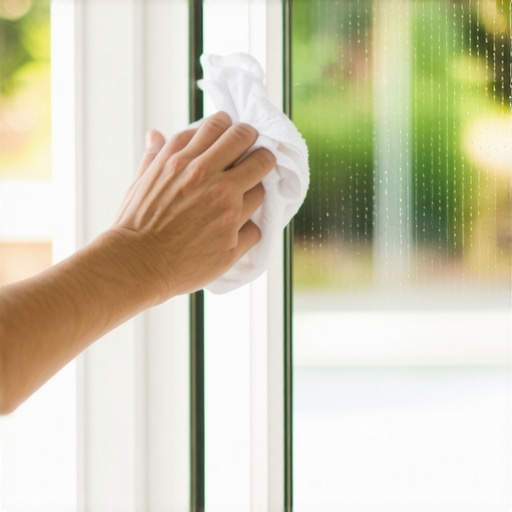
For a standard deposit-style scuff on the glass surface: first, flush the area with water to remove any loose grit that could cause a scratch during the cleaning process. Second, apply a professional-grade window cleaner that does not contain ammonia or heavy alcohols. Third, use a clean microfiber cloth to gently work the area in a circular motion. If the mark persists, it is likely a polymer transfer. In this case, I use a small amount of cerium oxide polish, which is the industry standard for removing surface blemishes from glass. This compound chemically interacts with the silica to provide a mirror-finish. However, be cautious: if your door has a ‘tint-in-glass’ or a ceramic frit, you need to verify that you aren’t polishing away the color. Finally, ensure the weep holes are clear. When you spray cleaner on a sliding door, it all runs down into the track. If that cleaner sits there with dirt and hair, it forms a sludge that prevents the door from draining, leading to potential mold and track damage. Maintaining an operable sash requires more than just clean glass: it requires a holistic approach to the entire fenestration system.