The Cloud Inside the Glass: Diagnosing the Failed Insulated Glass Unit
That persistent haze between your panes of glass is not a matter for a window cleaner; it is a mechanical failure of the Insulated Glass Unit (IGU). As a glazier with over two decades in the field, I have seen homeowners spend thousands on replace windows projects that were entirely unnecessary, simply because they did not understand the anatomy of a window seal. When we talk about a foggy window, we are discussing the breach of the primary and secondary seals that hold the argon or krypton gas in and keep the moisture-laden atmospheric air out. Once that seal is compromised, the desiccant inside the spacer bar becomes saturated, and the dew point within the unit shifts.
A few years ago, a homeowner called me in a panic because their new windows were ‘sweating’ and looking milky. I walked in with my hygrometer and showed them the humidity was 60%. It wasn’t the windows; it was their lifestyle choices combined with a minor manufacturing defect in the glazing bead. The moisture was being trapped against the seal, leading to premature failure. This is the reality of residential fenestration: it is a delicate balance of pressure, temperature, and moisture management.
“Installation is just as critical as the window performance itself. A high-performance window installed poorly will fail.” – AAMA Installation Masters Guide
The Physics of Thermal Pumping
To understand how to fix the issue, you must understand why it happened. Every day, your windows undergo a process called thermal pumping. As the sun hits the glass, the gas inside expands, putting pressure on the seals. At night, the gas contracts, creating a vacuum effect. Over time, this constant movement can cause the polyisobutylene (PIB) seal to develop microscopic fissures. In colder northern climates, where the temperature differential between the interior and exterior is extreme, this stress is magnified. If your window lacks a properly functioning weep hole system, water can sit in the rough opening or the track, saturating the seal until it gives way. This is why window repair is often more about water management than just the glass itself.
Can You Fix Fog Without Replacing the IGU?
The short answer is: rarely, and usually not permanently. There is a process known as ‘defogging’ where a technician drills tiny holes in the glass, sprays in a cleaning solution, and installs small vents. While this might remove the visible moisture, it does not restore the thermal efficiency of the unit. You have essentially turned a high-performance double-pane window into a vented, single-pane system. The R-value plummets. In a cold climate like Chicago or Minneapolis, where the U-Factor is king, this is a recipe for high energy bills. You want that Low-E coating on Surface #3 to reflect heat back into your home, but if the cavity is open to the air, that coating can eventually oxidize and fail.
The Glazier’s Solution: Glass-Only Replacement
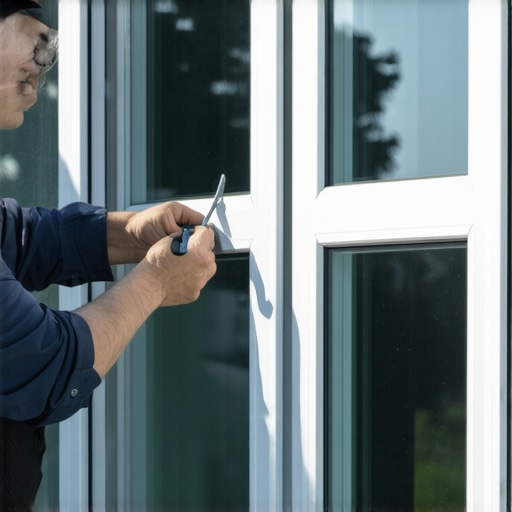
The most cost-effective and technically sound window repair for a foggy unit is an IGU swap. This involves removing the glazing bead, cutting the old sealant, and popping the failed glass unit out of the sash. You keep the frame, the hardware, and the trim. This avoids the massive expense of a full-frame replace windows job and prevents the need to disturb the exterior siding or interior casing. When I perform an IGU swap, I ensure the shim placement is precise so the glass sits level and the weight is distributed evenly across the sill pan. This prevents the sash from sagging and ensures the new seal isn’t under immediate structural stress.
“Field measurement and inspection of the rough opening are essential to ensure the fenestration product will perform as intended.” – ASTM E2112 Standard Practice
Why DIY Defogging Kits Often Fail
I have seen many homeowners try the DIY route with kits found online. The problem is that once the desiccant—the silica material inside the spacer—is saturated, it starts to leach chemicals onto the glass. This is known as ‘silica haze,’ and it is permanent. No amount of window cleaner or venting will remove it. If you see a white, powdery residue or a rainbow-like oily sheen inside the glass, the unit is biologically dead. You are no longer dealing with simple condensation; you are dealing with a chemical etch on the glass surface.
Water Management and the Sash Anatomy
When we look at window repair, we must look at the weep hole. These are the small exits at the bottom of the frame that allow water to escape. If these are clogged with debris or paint, water backs up and sits against the glazing bead. Most people don’t realize that the operable parts of the window are designed to let some water in, provided it can get back out. If that water stays, it rots wood frames and destroys the secondary seal on vinyl units. Always check your weeps before you blame the glass manufacturer.
The Verdict: Replace the Glass, Not the Window
If your frames are structurally sound—whether they are vinyl, fiberglass, or wood—there is no reason to tear the whole thing out. A professional can measure the thickness of your IGU (usually 1/2 inch, 5/8 inch, or 7/8 inch), identify the Low-E coating, and order a custom-fit replacement. This maintains the aesthetic of your home while restoring the thermal envelope. Don’t be sold on a $20,000 replacement project when a $500 glass swap will solve the foggy problem and restore your view. Understanding the mechanics of your windows is the best way to avoid being taken advantage of by high-pressure sales tactics that ignore the simple physics of the glass seal.