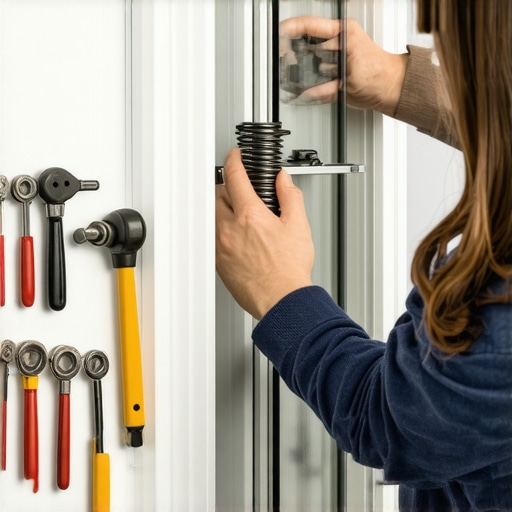
The Anatomy of the Falling Sash: Why Your Windows Won’t Stay Up
There is a specific sound a failing window makes. It is a sharp, metallic thwack followed by the heavy thud of a wood or vinyl sash hitting the sill. In my twenty-five years as a glazier, I have seen this phenomenon lead to countless broken glass units and, more importantly, a massive loss in thermal efficiency. When a window sash cannot maintain its position, it is not just an inconvenience; it is a failure of the fenestration system’s mechanical balance. Most homeowners assume that once a window starts acting like a guillotine, it is time to replace windows entirely. That is exactly what the high-pressure sales reps want you to believe.
I once sat across from a ‘Tin Man’ salesman in a drafty Victorian home. He was pushing a full-frame replacement of twenty-two windows, quoting the homeowner a price that could have bought a small yacht. His argument? The springs were ‘shot’ and the frames were ‘warped beyond repair.’ I asked for his refractometer or even a simple tension gauge. He had neither. I spent ten minutes with a flathead screwdriver and a tensioning tool, and suddenly, those ‘warped’ sashes were gliding like they were on ice. The homeowner didn’t need a $30,000 debt; they needed a $40 hardware adjustment. This is the reality of the industry: the ‘caulk-and-walk’ installers would rather sell you new vinyl than understand the physics of a spiral balance.
“Installation is just as critical as the window performance itself. A high-performance window installed poorly will fail.” – AAMA Installation Masters Guide
Understanding the Physics of Window Balances
To fix a window, you must understand the load it carries. In northern climates like Chicago or Minneapolis, where heavy double-glazed units are standard to fight the winter chill, the weight of the sash is significant. The Rough Opening must be perfectly plumb for these systems to work, but over time, houses settle. This settling puts pressure on the jambs, increasing friction and stressing the internal springs. Whether you have a ‘Block and Tackle’ system or a ‘Spiral Balance,’ you are dealing with stored kinetic energy. The spiral balance is a metal rod encased in a tube, twisted to create tension. When that tension dissipates, usually due to age or the breakdown of the internal lubricant, the window loses its ability to fight gravity.
The North Climate Reality: Why Tension Matters for Your Energy Bill
In a cold climate, the U-Factor is your most critical metric. We want a low U-Factor to keep the heat inside. However, if your window springs are weak, the sash does not seat firmly against the head or the sill. This creates a gap in the weatherstripping, allowing cold air to infiltrate. You can have the most expensive Low-E coating on Surface #3, reflecting long-wave infrared radiation back into your living room, but if your sash has a 1/16th-inch gap because the spring tension is off, that glass tech is useless. The Dew Point moves inside your wall cavity, leading to condensation and, eventually, the kind of rot that destroys headers.
Proper window repair starts with cleaning. I cannot tell you how many ‘broken’ windows I’ve fixed just by acting as a window cleaner first. Dust and grit accumulate in the tracks, increasing the coefficient of friction. When the friction exceeds the spring’s lift capacity, the window fails. Using a silicone-based lubricant—never WD-40, which attracts dust like a magnet—on the Glazing Bead and tracks is the first step before you even touch the tensioning hardware.
The Technical Guide to Re-Tensioning
If cleaning doesn’t work, it is time to adjust the torque. For spiral balances, you will need a specialized tensioning tool, though a thin-walled pair of needle-nose pliers can work in a pinch if you are careful. You must first raise the sash and secure it. Disconnect the balance from the Sash shoe at the bottom. This is where most DIYers fail; they let the rod spin out of control, stripping the internal gears. You want to give it two to three full clockwise turns to increase the lift. Do not over-tension. If the window ‘jumps’ when you unlock it, you’ve gone too far, which puts unnecessary stress on the Muntin bars and the glass seal itself.
“Proper adjustment of operable hardware is essential to maintain the tested air infiltration ratings of the unit.” – ASTM E2112 Standard Practice
For those with ‘Constant Force’ balances—those stainless steel coils—there is no ‘tensioning.’ You simply have to replace the coil ‘slug.’ But here is the professional secret: often, the issue isn’t the spring at all, but the Shim. If the original installer over-shimmed the side jambs, the frame is bowed inward, pinching the sash. No amount of spring tension will fix a pinched frame. You have to check the mid-point measurement of the frame against the top and bottom. If it’s narrow in the middle, you have a structural installation error, not a hardware failure.
When to Stop Repairing and Start Replacing
While I advocate for repair, there is a point of diminishing returns. If your Weep Hole system is clogged and the Sill Pan has been breached, the internal wood core is likely compromised. If you see ‘pumping’ in the insulated glass unit—where the glass bows inward—your argon gas has leaked out, and the thermal performance has tanked. In these cases, replace windows with a focus on high-performance fiberglass or thermally broken aluminum. But until you see rot or seal failure, keep your springs tight and your tracks clean. Your wallet, and your furnace, will thank you.