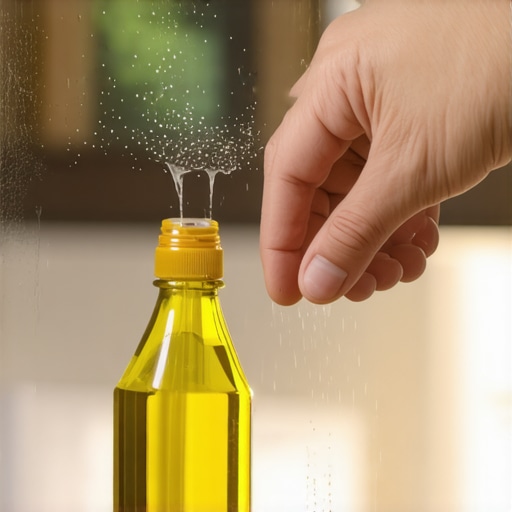
The First Battle After Window Installation: The Factory Sticker
You have spent thousands of dollars on a full-frame window repair or a complete replacement. The installers have finished shimming the frames, the flashing tape is perfectly integrated with the house wrap, and the trim is nailed. But as you look at your beautiful new investment, you are staring at a five-inch square of aggressive adhesive and paper known as the NFRC label. This sticker is vital for building inspections and tax credits, but once the job is signed off, it becomes a stubborn architectural blemish. Most homeowners reach for a razor blade or a harsh chemical solvent, but as a master glazier with over two decades in the field, I have seen more glass ruined by ‘cleaning’ than by actual storm damage. The secret to preserving your glazing bead and the glass surface itself lies in your kitchen pantry: cooking oil.
The Condensation Crisis and the Sticky Ghost
A homeowner called me in a panic because their new windows were ‘sweating’ and looked permanently foggy. I arrived at the site with my hygrometer and a high-intensity inspection light. I walked in and showed them the humidity in the room was 60 percent, which was a lifestyle issue, but the ‘fog’ they saw was actually a ghosting effect from the factory adhesive residue. They had tried to scrub the stickers off with a dry rag and an abrasive sponge, which had actually driven the adhesive deeper into the microscopic pores of the glass. It wasn’t a seal failure; it was a maintenance failure. I took a bottle of simple vegetable oil from their cabinet and showed them how a non-polar lipid could do what water and friction could not. This isn’t just a ‘hack,’ it is a matter of chemical compatibility and protecting the integrity of the glazing system.
“The NFRC label provides the only reliable way to determine window energy performance and compare products. Once removed, the glass surface must be maintained according to manufacturer specifications to ensure the longevity of the coatings.” – National Fenestration Rating Council (NFRC)
The Science of Adhesives and Non-Polar Solvents
To understand why we use cooking oil, we must understand the chemistry of the ‘glue’ used by window manufacturers. These are typically pressure-sensitive adhesives (PSAs) designed to survive extreme temperature fluctuations during shipping. When a window sits in a rough opening during a hot July install, the sun’s radiant heat can bake these adhesives into a cross-linked polymer state. If you are in a southern climate where the Solar Heat Gain Coefficient (SHGC) is high, the sun’s energy is being absorbed and reflected right at that sticker interface. Using a petroleum-based solvent like mineral spirits can be effective, but it poses a significant risk to the vinyl frame or the rubber glazing bead. These chemicals can leach the plasticizers out of the vinyl, leading to premature cracking or discoloration. Cooking oil, whether it is canola, olive, or vegetable oil, is a mild, non-polar solvent. It works by infiltrating the adhesive’s molecular structure and breaking the bond between the polymer and the glass surface without attacking the surrounding materials.
Glazing Zooming: Protecting Surface #1
In the world of high-performance windows, we talk about glass surfaces by number. Surface #1 is the exterior face of the glass, and Surface #4 is the interior face. Most modern windows use a Low-E coating. In cold northern climates like Chicago or Minneapolis, we prioritize a low U-Factor to prevent heat loss, often placing the Low-E coating on Surface #3. However, some newer ‘hard-coat’ Low-E windows have the coating on Surface #4 (the side you touch inside the house). If you attack a sticker on Surface #4 with a metal scraper or a caustic cleaner, you can permanently scratch or strip the metallic oxide layer that provides your thermal insulation. This is why the ‘caulk-and-walk’ installers often leave the homeowners with damaged glass; they don’t understand the physics of what they are cleaning. The oil method is safe for these delicate surfaces because it requires no mechanical abrasion.
The Math of Window Maintenance and ROI
Many homeowners are told that new windows will pay for themselves in energy savings within a few years. As someone who has analyzed the thermal performance of thousands of units, I have to be honest: the ROI on a full window replacement can take 15 to 20 years. The real value is in comfort and the prevention of rot. If you use the wrong cleaners and damage the seal or the operable components of a sash, you are throwing that ROI away. A window is a complex system involving the sash, the muntins, the weatherstripping, and the weep holes. If you use a spray cleaner that drips down and clogs the weep holes, you are inviting water to sit in the sill pan, which eventually leads to the rot I have seen destroy countless headers and subfloors.
“Installation is just as critical as the window performance itself. A high-performance window installed poorly will fail to meet energy expectations and may lead to moisture intrusion.” – AAMA Installation Masters Guide
Step-By-Step: The Professional Residue Removal Process
First, peel away as much of the paper as possible by hand. If the sticker is stubborn, use a hair dryer to gently warm the adhesive, but do not concentrate the heat in one spot for too long, as thermal stress can crack the glass. Once the paper is gone and the gummy residue remains, apply a generous amount of cooking oil to a soft microfiber cloth. Rub the oil into the residue in a circular motion. Let it sit for at least ten minutes. This ‘dwell time’ allows the lipids to penetrate the adhesive. You will see the residue begin to liquefy. Wipe it away with a clean part of the cloth. Finally, use a standard window cleaner or a mixture of vinegar and water to remove the oil. This ensures that when you finally close the sash, you aren’t leaving a slippery film on the weatherstripping that could attract dust and compromise the air seal.
Understanding Your Climate and Glass Performance
Whether you are in the freezing North where U-Factor is king or the humid South where you need a low SHGC to block the sun’s heat, your windows are the most vulnerable part of your building envelope. When you are performing a window repair or cleaning up after a replacement, you must respect the engineering. A double-pane unit filled with Argon gas relies on a perfect seal. Harsh chemicals can degrade the secondary seal of the Insulated Glass Unit (IGU). By choosing cooking oil, you are choosing a solution that respects the material science of the vinyl, the glass, and the sealants. Don’t let a simple sticker removal become the start of a seal failure. Treat your glass with the same precision I use when I set a 200-pound pane into a rough opening with only an eighth of an inch of shim space to spare. Quality windows deserve quality care.