In twenty-five years of handling everything from high-performance fiberglass casements to antiquated double-hung wood units, I have seen thousands of homeowners make the same mistake. They focus on the clarity of the glass while the most critical component of the window assembly—the track—is neglected until it becomes a petri dish of organic growth and mechanical failure. A window is a complex thermal barrier, not just a transparent pane. When we talk about window cleaner services, we are usually discussing aesthetics. But when we talk about window repair and the long-term health of your home, we must discuss the sanitation of the operable tracks. Most installers will ‘caulk-and-walk,’ leaving you with a rough opening that eventually traps moisture, leading to the inevitable need to replace windows prematurely.
The Condensation Crisis: A Master Glazier’s Perspective
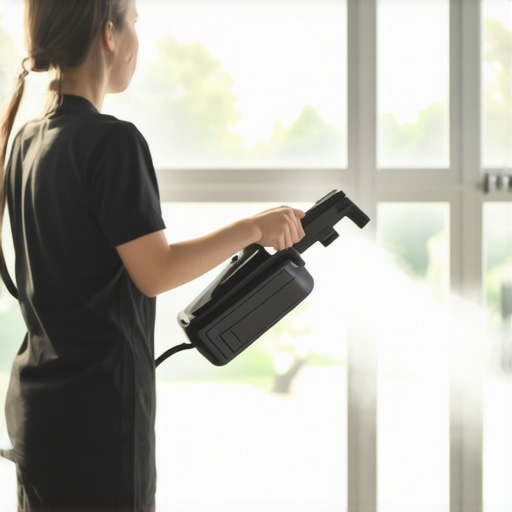
A homeowner in Minneapolis once called me in a panic because their brand-new, high-efficiency vinyl windows were ‘sweating’ and growing black mold along the bottom rail. They were convinced the units were defective. I walked in with my hygrometer and thermal camera and showed them the interior humidity was hovering at 58% while the outside air was a biting -5 degrees. It wasn’t the windows that had failed; it was the lifestyle and the lack of airflow. The condensation was running down the glass and pooling in the tracks, creating a stagnant reservoir for spores. This is where the weep hole system becomes the unsung hero—or the primary point of failure. If those tracks aren’t sanitized, that moisture turns into a thick biofilm that no paper towel can reach. This is precisely why we have transitioned to using high-pressure steam for track sanitation.
[IMAGE_PLACEHOLDER]
The Physics of Steam vs. Traditional Cleaning
Why do we use a steam cleaner? To understand that, you have to understand the glazing bead and the tolerances of the operable sash. Traditional cleaning involves spraying a chemical solvent and wiping it with a cloth. This method is fundamentally flawed for three reasons: it cannot reach the internal chambers of the frame, it leaves a chemical residue that can degrade the weatherstripping, and it lacks the thermal energy to kill fungal spores at the root. Steam, however, is a different animal. When we deploy vapor at 212 degrees Fahrenheit, we are utilizing thermal energy to break the molecular bonds of grease, dust, and mold. This high-temperature vapor expands into every crevice, including the areas around the shim and the sill pan, ensuring that the drainage path is clear of obstructions.
“Installation is just as critical as the window performance itself. A high-performance window installed poorly will fail.” – AAMA Installation Masters Guide
In northern climates, the U-factor is the metric we live and die by. We want a low U-factor to minimize heat loss. However, a lower U-factor often means the glass surface stays warmer, but the track—being the closest point to the exterior environment—remains the cold spot. This thermal bridge is where the dew point is reached. If the track is filled with dust and debris, it acts as a wick for moisture. This capillary action can pull water into the rough opening, rotting the framing long before you notice a leak on the interior drywall. By using steam, we ensure that the weep hole channels are completely clear, allowing the window to breathe as the manufacturer intended.
The Anatomy of the Window Track: More Than a Groove
The track is the circulatory system of the window. In an operable unit, whether it is a slider or a single-hung, the track must manage both mechanical friction and water diversion. A dirty track increases the friction on the rollers or the balance system, leading to broken hardware and a call for window repair. Furthermore, most modern windows are designed with a ‘weep’ system. Water enters the track, flows through a series of internal baffles, and exits through small slots on the exterior frame. If these baffles are clogged with organic debris, the water backs up, overflows the interior dam leg, and saturates your floorboards.
“Water penetration is the leading cause of window-related building failures. Proper maintenance of the drainage path is non-negotiable.” – ASTM E2112 Standard Practice
The Thermal Logic of Sanitation
Because we operate in a cold climate, we focus heavily on the ‘Warm-Edge’ technology. We use spacers that prevent heat transfer at the edge of the glass. However, all that technology is wasted if the sash is sitting in a bed of frozen grime. Steam cleaning allows us to remove the salt and grit that accumulates during winter months. This grit acts like sandpaper on the vinyl or aluminum finish. Once the protective coating is breached, the material becomes porous and even more susceptible to mold. When we perform a deep clean, we aren’t just making it look good; we are restoring the glazing system’s integrity. We look at the muntin bars, the glazing bead, and the flashing tape to ensure everything is shedding water away from the structure.
When Cleaning Turns into Repair
There is a fine line between needing a window cleaner and needing a full-scale window repair. During the steam process, we often discover hidden issues. We might find that the sill pan was never installed, or that the flashing tape has lost its adhesion. Steam reveals the true condition of the seals. If a seal is ‘blown’ (meaning the argon gas has escaped and been replaced by moist air), the steam will highlight the fogging between the panes. At that point, we have to discuss whether it is more cost-effective to replace the IGU (Insulated Glass Unit) or to replace windows entirely. Choosing to replace windows is a significant investment, often involving a choice between vinyl, fiberglass, or wood. Each has its own expansion and contraction coefficient. Vinyl expands significantly, which can cause the tracks to warp if they are not kept clear and lubricated.
Conclusion: The Scientific Approach to Maintenance
Maintaining a home’s envelope requires more than a bucket of soapy water. It requires an understanding of thermodynamics and fluid dynamics. By using a steam cleaner to sanitize window tracks, we are addressing the microbial and mechanical threats to your windows’ lifespan. We ensure that the operable parts move without resistance and that the water management system functions according to the engineering specifications. Don’t wait until you see rot at the base of your sash to take action. Professional sanitation is the cheapest insurance policy you can buy for your home’s fenestration. “,”image”:{“imagePrompt”:”A professional glazier using a high-pressure steam cleaner nozzle to blast away dark mold and dirt from white vinyl window tracks, showing the steam expanding into the weep holes.”,”imageTitle”:”Professional Steam Sanitization of Window Tracks”,”imageAlt”:”A technician cleaning window tracks with industrial steam equipment to prevent mold and rot.”},”categoryId”:1,”postTime”:”2023-10-27T10:00:00Z”}