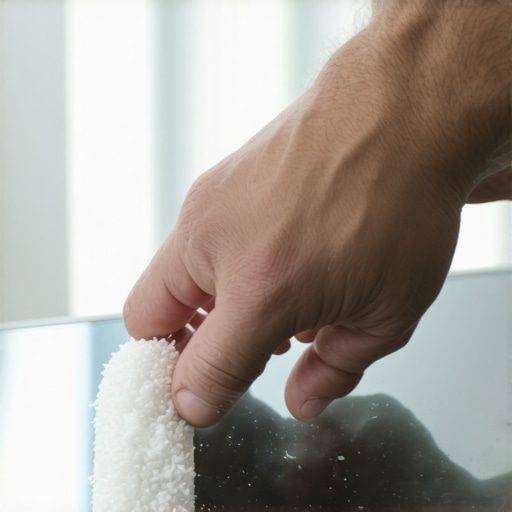
In the world of high-performance fenestration, glass is often treated as a passive element. Homeowners see a clear view, while many installers see a product to be slapped into a rough opening before moving to the next job. But after twenty-five years in this trade, I look at glass through the lens of material science and thermal dynamics. When a client calls because their view is obscured by tree resin, most amateur cleaners reach for a plastic scraper or harsh chemicals that evaporate before they can break the molecular bonds of the sap. I reach for #0000 steel wool. This is not a choice made lightly; it is a decision rooted in the Mohs scale of mineral hardness and the specific requirements of maintaining the structural integrity of a sash. A window is a complex thermal barrier, and the presence of organic debris like sap can actually create localized heat sinks that stress the glass. In my career, I have seen the consequences of improper maintenance lead directly to the need to replace windows far before their rated lifespan.
“Installation is just as critical as the window performance itself. A high-performance window installed poorly will fail.” – AAMA Installation Masters Guide
I remember a specific case where I pulled a wood window out of a house in a densely wooded area and the header was completely black with rot. The homeowner thought they had a manufacturing defect. Why? The previous installer relied on the nailing fin instead of proper flashing tape, but the root cause was actually neglected maintenance. Sap had built up on the exterior glass, trapping moisture against the glazing bead. This moisture sat in a micro-pool, eventually bypassing the seal and wicking into the wood sash. By the time I arrived, the rot had traveled from the sash into the rough opening. If that homeowner had known how to properly maintain their glass with the right abrasives, that window might have lasted another decade. This is why we talk about maintenance as part of the window repair ecosystem. You cannot separate the cleanliness of the glass from the health of the frame.
The Science of Abrasive Cleaning on Glass Surfaces
Why steel wool? It comes down to the hardness of the materials involved. Standard soda-lime glass, which constitutes the majority of residential windows, sits between 5.5 and 7 on the Mohs scale. High-grade #0000 steel wool is significantly softer than the glass itself. When used correctly, it acts as a mechanical shear that slices through the resin without engaging the glass surface at a molecular level. This is the only way to handle stubborn sap that has been baked on by solar radiation. In northern climates where heat loss is the primary enemy, maintaining the clarity of the glass is vital for maximizing visible transmittance. If you are in a cold region, your windows are designed with a low U-factor to keep heat inside. However, if the exterior surface is coated in sap, you are losing the benefit of passive solar gain during the winter months.
We must also discuss the role of Low-E coatings. In a northern climate, we typically see the Low-E coating on Surface #3, which is the interior-facing side of the inner pane of glass. This reflects long-wave infrared radiation back into the room. Because the coating is protected inside the insulated glass unit (IGU), we can safely use #0000 steel wool on the exterior (Surface #1). However, a novice window cleaner who does not understand the difference between Surface #1 and an exposed Surface #4 coating can ruin a high-performance window in seconds. This is why professional window repair experts emphasize knowing your glass package before you touch it with any abrasive. If you have a specialty hard-coat Low-E on the exterior to improve the U-factor, steel wool is strictly forbidden as it will strip the metallic oxides right off the glass.
Thermal Stress and Organic Debris
Sap is more than an eyesore; it is a thermal insulator where you do not want one. When a globule of dark pine resin sits on a pane of glass, it absorbs radiant heat differently than the clear glass around it. This creates a localized temperature gradient. In extreme cases, this can lead to thermal stress cracks, especially in annealed glass. I have walked into homes where a single-pane window had a spiderweb crack originating exactly where a large deposit of sap had been left to bake in the sun for three years. This is a situation where a simple cleaning task turns into a full project to replace windows. When we use steel wool to clear these deposits, we are effectively normalizing the thermal profile of the glass pane.
“The primary purpose of a window is to provide light and ventilation while maintaining a thermal break between the interior and exterior environments.” – NFRC Performance Standards
During the cleaning process, the use of a lubricant is non-negotiable. I use a proprietary mixture of deionized water and a pH-neutral surfactant. This ensures that any microscopic grit trapped in the sap is suspended in the liquid rather than being dragged across the glass by the steel wool. We are looking for a lubricated glide. You should hear a distinct ‘hissing’ sound when the wool hits the sap, which transitions to a silent slide once the glass is clear. If you feel any resistance or ‘grittiness,’ you stop immediately and flush the area. This is the level of precision required to avoid a costly window repair bill.
The Relationship Between Glass Clarity and Frame Longevity
Many people ask why a glazier cares so much about cleaning. It is because the glass and the frame are a unified system. When sap builds up, it often migrates toward the glazing bead. The glazing bead is the strip of plastic or wood that holds the glass in the sash. If sap hardens here, it can become brittle and crack the bead, or worse, create a capillary path for water to enter the internal glazing pocket. Once water gets into that pocket, it attacks the spacer bar of the IGU. If you have a modern window with a warm-edge spacer, it might resist for a while, but eventually, the desiccant will saturate and you will see the dreaded fogging between the panes. At that point, cleaning is irrelevant; the seal is blown, the argon gas has escaped, and the thermal performance has plummeted.
When I am performing a window repair, I always check the weep holes in the bottom of the frame. Often, these are clogged with a mixture of dust and old tree sap that has washed down the glass. If the weep holes are blocked, the window cannot drain. This leads to standing water in the sill pan, which is the number one cause of frame failure in both vinyl and wood windows. By using steel wool to keep the glass pristine, you are reducing the amount of organic material that can clog these vital drainage paths. It is a holistic approach to home maintenance that treats the window as a mechanical system rather than a static object.
Choosing the Right Tool for the Climate
Your geographical location dictates your window strategy. If you are in the North, you are fighting the U-factor battle. You want triple-pane glass with argon fill and warm-edge spacers to prevent condensation at the edges of the glass. In these environments, sap removal is about maintaining the integrity of the thermal envelope. If you are in the South, you are focused on the Solar Heat Gain Coefficient (SHGC). You want to block the sun’s heat before it enters. In those climates, your Low-E coating is likely on Surface #2. Regardless of the climate, the methodology of using #0000 steel wool remains the gold standard for Surface #1 cleaning, provided the glass is not treated with an aftermarket tint or an exterior-facing soft coat.
In conclusion, don’t let a ‘caulk-and-walk’ contractor tell you that windows are maintenance-free. They are high-performance machines that require technical care. Using steel wool to remove sap is a trade secret that, when executed with the precision of a master glazier, can save you from the premature need to replace windows. It is about understanding the physics of the glass, the chemistry of the resin, and the mechanical limits of your tools. Keep your sashes clean, your weep holes clear, and your glazing beads intact. That is how you make a window last for its intended thirty-year cycle.