The Anatomy of a Failing Sill: Why Your Tracks Matter
In twenty-five years of being a window cleaner and installation expert, I have seen more good windows ruined by a lack of maintenance than by actual physical damage. Most homeowners view the window track as a catch-all for dead flies, dust, and pet hair. They ignore it until the operable sash starts sticking or the frame begins to show signs of mold. But as a master glazier, I see the window track as the heart of the drainage system. When you ignore the gunk, you are not just being messy; you are inviting a catastrophic failure of the sill pan and the surrounding wall structure. Most people assume that a window is a static object, but it is actually a dynamic pressure-equalized system that must breathe and drain. If the drainage path is blocked, the physics of the entire unit changes, often leading to a premature need to replace windows.
The Condensation Crisis: A Master Glazier’s Narrative
I recall a specific call-out last February during a particularly brutal cold snap. A homeowner in the suburbs was in a total panic because their brand-new, high-efficiency double-pane windows were ‘sweating’ so badly that water was pooling on the floor. They were ready to sue the manufacturer, convinced the seals had failed on all twenty units. I walked into the living room, pulled out my hygrometer, and showed them the reading: 62% humidity. Outside, it was ten degrees. I explained that it was not the windows failing; it was their lifestyle choices. They were running a humidifier full blast while boiling pasta and drying clothes on a rack indoors. But there was a secondary culprit that made the situation worse. When I opened the operable sash, the tracks were packed with a thick paste of dust and hair. This debris acted like a sponge, holding moisture against the glazing bead and the bottom of the sash, preventing the natural airflow that helps mitigate condensation. I spent the next hour showing them how to clear those tracks, not with a scrub brush and a prayer, but with the thermal power of steam. It was a classic case where a simple window cleaner routine would have saved them weeks of anxiety.
“Installation is just as critical as the window performance itself. A high-performance window installed poorly will fail.” – AAMA Installation Masters Guide
The Physics of Steam: Why Scrubbing is for Amateurs
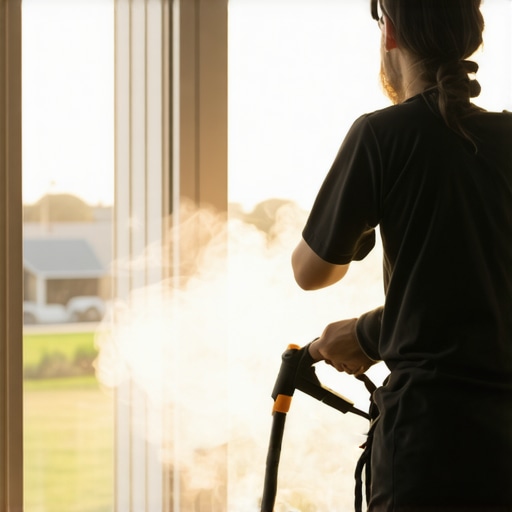
When you use a window cleaner chemical and a paper towel, you are mostly just moving the dirt around. You are pushing it into the corners of the rough opening where you cannot reach, or worse, you are shoving it deeper into the weep hole. This is why I advocate for the ‘lazy’ way, which is actually the scientifically superior way: the steam cleaner. Steam works by utilizing high-temperature water vapor to break the surface tension and emulsify organic matter. From a glazing perspective, the thermal energy of the steam vibrates the molecules of the dirt, allowing it to lift off the vinyl or fiberglass frame without the need for abrasive scrubbing that can scratch the finish or damage the muntin. We are talking about 200-plus degrees of focused energy that kills mold spores on contact and liquefies the grease that builds up from cooking and outdoor pollution. It is the only way to ensure the weep hole is truly clear. These small slots in the exterior of the frame are designed to let water exit the sill pan via gravity and pressure differentials. When they are clogged, water backs up, finds a shim, and follows it directly into your drywall. This is how a simple cleaning issue turns into a five-figure window repair or a full-scale rot remediation.
The Glazier’s Step-by-Step Guide to Steam Cleaning
First, you must understand the ‘Shingle Principle.’ In the world of glazing, we always work from the top down because water follows gravity. Start by opening the window fully to expose the entire track. Use a vacuum with a narrow crevice tool to remove the large debris; you do not want to be making ‘dirt soup’ with your steamer. Once the loose stuff is gone, trigger your steam wand. Direct the nozzle into the corners of the track and along the glazing bead where the glass meets the frame. The steam will penetrate the microscopic pores of the material. Watch as the gunk turns into a liquid slurry. This is the moment to act. Take a microfiber cloth and simply wipe the slurry away. Because the heat has lowered the viscosity of the grime, it lifts with zero resistance.
“The fenestration product must be installed and maintained in a manner that provides for the drainage of any water that enters the window system.” – ASTM E2112 Standard Practice
Pay special attention to the weep hole exits. If you see steam coming out of the holes on the outside of the house, you know the path is clear. If you do not, keep the steam focused on the internal drainage slots until the blockage is cleared. This ensures that the next time a driving rain hits your home, the water will exit the frame as intended, rather than overflowing the sill pan and soaking your flashing tape and headers.
The Thermal Impact and Long-Term Durability
In northern climates where we deal with extreme temperature swings, the integrity of the window track is vital. When moisture is trapped in a dirty track during a freeze-thaw cycle, the water expands as it turns to ice. This expansion can actually stress the glazing bead or cause micro-cracks in vinyl frames. Over time, these small cracks allow air infiltration, which sky-rockets your U-factor and makes your home feel drafty. By keeping the tracks surgically clean with a steamer, you are ensuring that the sash seals perfectly against the weatherstripping. This maintains the thermal envelope of the building. If you find that even after a deep clean the window is still difficult to operate or you see daylight through the corners, you might be looking at a structural issue. Sometimes the rough opening has settled, or the shim has compressed, meaning no amount of cleaning will fix the problem. In those cases, a professional window repair or even a decision to replace windows becomes the only viable path to protecting your home’s value. But for 90% of the homeowners I visit, a simple shift from chemical cleaners to steam technology would extend the life of their fenestration by a decade. Water management is a science, and your window tracks are the frontline of that defense. Do not treat them like an afterthought; treat them like the precision-engineered drainage channels they are.