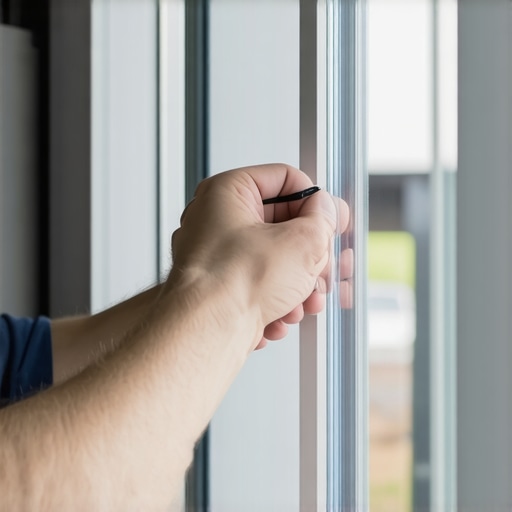
The Physics of a Fracture: Why Your Window is a Ticking Time Bomb
As a master glazier with over two decades in the trenches, I have seen homeowners ignore a small bullseye chip for months, only to wake up on a freezing January morning to a crack that spans the entire sash. A window is not a static object; it is a dynamic barrier under constant stress. When you have a chip, you have a structural failure in the glass surface tension. The glass is constantly expanding and contracting based on the Delta T—the temperature difference between your climate-controlled interior and the brutal exterior elements. In a northern climate, this thermal cycling is the primary driver of crack propagation.
The Narrative of the Lakeside Implosion
I recall a call from a homeowner on the shores of Lake Michigan. They had a small pit in their double-pane annealed glass, likely from a pebble kicked up by a lawnmower. They figured it was cosmetic. A week later, a localized pressure system moved in. I walked into the room and saw the inner pane had literally imploded. The chip had created a weak point where the glass could no longer withstand the wind pressure. The structural integrity of the glass was compromised, and the pressure differential between the house and the storm outside did the rest. This is why a simple window repair is never just about aesthetics; it is about maintaining the safety of the rough opening.
“Installation and maintenance are just as critical as the window performance itself. A high-performance window that has suffered surface damage will eventually fail under normal thermal loads.” – AAMA Installation Masters Guide
Understanding Your Glass: Annealed vs. Tempered
Before you grab a repair kit, you need to know what you are looking at. Most residential windows use float glass that has been annealed—slowly cooled to relieve internal stresses. When this glass chips, it creates sharp shards and long radial cracks. If you are dealing with a patio door or a window near the floor, it is likely tempered safety glass. If tempered glass chips, you do not repair it; you replace the entire pane because tempered glass is designed to shatter into thousands of small cubes the moment its surface tension is breached. If you see a chip in tempered glass that hasn’t shattered yet, you are looking at a miracle of physics that won’t last another hour.
The Technical Guide to Resin Injection Repair
For a small chip in standard float glass, a resin-based window repair is your only hope of avoiding a full sash replacement. You cannot just smear a window cleaner over it and hope for the best. You need a high-viscosity UV-curable resin that can penetrate the microscopic fissures of the chip. First, the area must be surgically clean. Any moisture trapped in the chip will prevent the resin from bonding and, even worse, will expand when it freezes, blowing the crack wide open. Use a vacuum tool to draw air out of the fracture before injecting the resin. This ensures the resin fills the entire void, not just the surface. Once the resin is in place, a curing film is applied, and UV light is used to harden the material, effectively welding the glass back together at a molecular level.
The Thermal Stress Factor
In cold climates, the U-Factor of your window determines how much heat is escaping. A chip disrupts the Low-E coating, which is typically found on surface #2 (the inner face of the outer pane). This coating is designed to reflect long-wave infrared radiation. When a chip occurs, you are not just losing glass; you are creating a thermal bridge. The glass around the chip becomes colder than the surrounding area, leading to localized condensation. This moisture can then seep into the glazing bead or even rot the muntin if you have traditional wood windows. If the chip is deep enough to reach the spacer, you risk losing the argon gas fill, which turns your high-efficiency unit into a foggy, useless piece of trash.
“The integrity of the seal and the glass surface is paramount. Once a breach occurs, the NFRC ratings for U-factor and SHGC are effectively voided until a permanent repair or replacement is executed.” – NFRC Performance Standards Manual
The Window Cleaner’s Role in Prevention
Many homeowners find these chips only when they are acting as their own window cleaner. This is the best time for a close-up inspection. Look for ‘clamshell’ fractures or ‘star’ breaks. If you find one, do not apply pressure. Avoid using ammonia-based cleaners on damaged glass as the chemicals can react with the laminated interlayers in some high-performance units. Instead, clear the debris with a soft brush and seal the area with a small piece of clear tape to keep moisture out until a professional glazier can arrive with a proper bridge and injector tool.
When Repair is Futile: Knowing When to Replace Windows
There is a limit to what resin can do. If the chip has already sprouted a ‘runner’—a crack longer than a few inches—the sash is toast. At this point, the structural load-bearing capacity of the glass is gone. This is especially true if the crack reaches the edge of the glass where it meets the shim and the frame. The expansion of the frame material (especially vinyl, which has a high coefficient of expansion) will pinch the glass at that crack point and finish the job. When this happens, you need to replace windows rather than pour money into a temporary fix. A full-frame replacement might be necessary if the original installation lacked a proper sill pan or flashing tape, leading to secondary rot issues that the glass failure merely highlighted. Keep an eye on your weep holes as well; if they are clogged, water can back up into the glazing pocket, accelerating the failure of the insulated glass unit (IGU) seal.