The Anatomy of a Paint-Locked Sash
In my twenty-five years as a master glazier, I have seen homeowners face a particular kind of frustration that leads them to make expensive mistakes. They walk into a room on a beautiful spring day, reach for the sash, and pull with all their might, only to find the window is as solid as the brick wall surrounding it. Often, they assume the house has settled or the wood has rotted. Usually, the culprit is far simpler: a previous painter who prioritized speed over function. This is what we call a paint-locked window. It is not just an inconvenience; it is a performance failure. When a sash cannot move, it cannot seal properly against the weatherstripping, which completely negates the U-factor you are paying for in your heating bills. Before you call a contractor to replace windows that might have another fifty years of life in them, you need to understand the mechanics of the paint bond and how a humble putty knife can be your most powerful window repair tool.
The Sales Pitch Takedown: A Lesson in Restoration
I recall sitting in a kitchen in a drafty Victorian home a few years back. The owner had a quote from a high-pressure sales firm for twenty-two vinyl inserts. The salesman told her the windows were structurally compromised because they would not budge. He used a lot of flashy terms about argon gas and multi-chambered frames, but he did not once look at the paint line. I asked for a stiff-bladed putty knife. Within ten minutes, I had the lower sash moving freely. The issue was not the structure; it was three decades of latex paint acting as a chemical adhesive between the sash and the interior stop. We did not need to replace windows; we needed to restore the operable status of the existing ones. That homeowner saved fifteen thousand dollars that day because she understood that a window is a mechanical system, not just a piece of glass in a frame.
“The primary purpose of a window is to provide a barrier against the elements while allowing light and air. Structural failure begins when the operable components are compromised by external coatings.” – ASTM E2112 Section 5.2
Understanding the Physics of the Paint Bridge
To unstick a window, you must first understand what you are fighting. When paint is applied to the junction of the sash and the stop or the parting bead, it creates a bridge. As the paint cures, it forms a mechanical bond that can withstand hundreds of pounds of vertical force. If you try to force the window up by the lift rail, you risk snapping the rail or stripping the screws out of the wood. The goal of the putty knife trick is to break this bridge using lateral shear rather than vertical leverage. In a cold climate like Minneapolis or Chicago, this is particularly critical. If that window is stuck even a fraction of an inch open, you are losing massive amounts of heat through air infiltration. In the North, the U-factor is king, and a window that does not close fully is a thermal disaster. By breaking the paint seal, you allow the sash to seat firmly into the sill pan, engaging the weatherstripping and stopping the convection currents that make your living room feel like a refrigerator.
The Master Glazier’s Putty Knife Technique
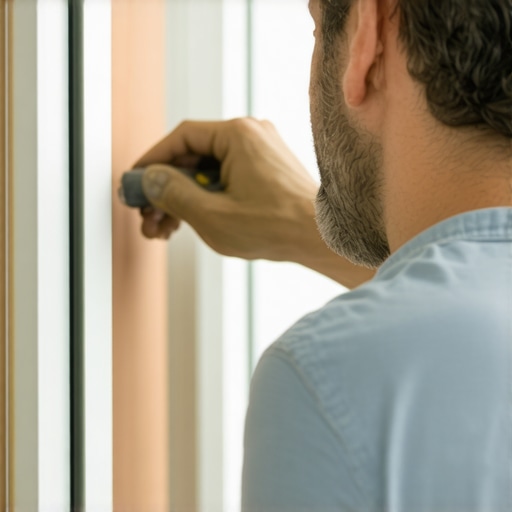
Step one of this window repair is selecting the right tool. Do not use a flexible spackle knife. You need a stiff-blade putty knife, preferably one with a hammered end. Start at the corner where the sash meets the interior stop. You are looking for the seam. Insert the blade at a fifteen-degree angle, pointing away from the glass. You must be careful not to nick the glazing bead or the glass itself. Gently tap the handle of the knife with a small hammer to drive the blade into the paint bridge. Move along the entire perimeter of the sash. You will hear a satisfying crack as the paint bond fails. This is the sound of your window regaining its status as an operable unit. Once the interior stop is clear, you must repeat the process on the exterior, specifically where the sash meets the parting bead. This is often where a window cleaner might notice the most buildup of grime and old paint. If you are working on a double-hung window, do not forget the meeting rail where the two sashes lock together. Often, paint seeps into this joint, creating a hidden bond that no amount of pulling will break.
Climate Logic and Thermal Performance
In northern regions, the enemy is heat loss and the dreaded dew point. When you have a stuck window that is slightly ajar, warm, moist indoor air hits the cold glass and the frame, leading to condensation. This moisture then drips down into the rough opening, leading to the rot that many people mistake for a failed window. By using the putty knife trick to ensure your windows can close and lock, you are performing a critical energy audit. A locked window pulls the sashes together, compressing the seals. This is the only way to achieve the NFRC-rated performance of the unit. Even the most expensive triple-pane glass will underperform if the air can bypass the frame entirely because of a paint-locked meeting rail. We must manage the heat and the water, and that starts with an operable sash.
“Installation is just as critical as the window performance itself. A high-performance window installed poorly will fail.” – AAMA Installation Masters Guide
When to Repair and When to Replace
While the putty knife trick is a miracle for painted-shut windows, it is not a cure-all. During your window repair process, you should inspect the wood. If you find that the wood is soft or the muntins are crumbling, the paint may have been the only thing holding the unit together. However, if the wood is solid, there is no reason to replace windows simply because they are stuck. After you get the window moving, take a piece of paraffin wax or a bar of soap and rub it along the tracks. This provides a dry lubricant that will prevent the wood from binding in the future. Check the sash cords or balances. If they were painted over, they will need to be cleaned or replaced to ensure the window stays open once you have freed it. This level of detail is what separates a professional restoration from a quick fix. You are not just unsticking a window; you are restoring a piece of the building envelope’s mechanical integrity.