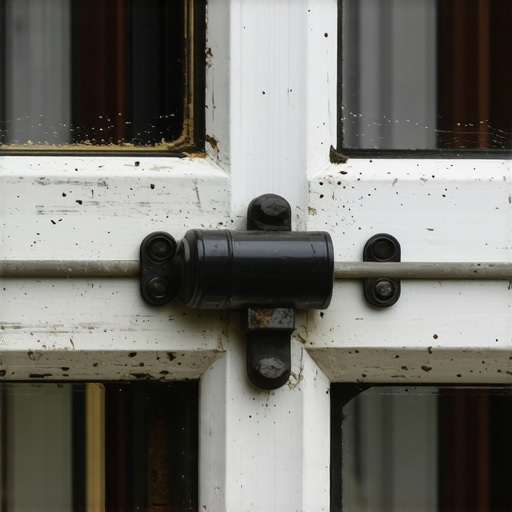
The Frustrating Click That Never Comes
You go to bed at night, turn the handle on your double-hung or casement window, and instead of that satisfying, airtight click, you feel a hard resistance. You push, you pull, you might even lift the sash with all your might, but the cam lock refuses to engage with the keeper. Most homeowners assume the lock itself is broken and head to the hardware store for a cheap replacement. But as someone who has spent over two decades in the glazing industry, I can tell you that the lock is almost never the problem. It is merely the messenger. The real issue is usually a slow-motion structural failure or a fundamental misunderstanding of thermal physics. When a window refuses to lock, it is telling you that the geometry of your wall has changed, or the window’s original installation was a ‘caulk-and-walk’ disaster that is finally coming home to roost.
The Condensation Crisis: A Narrative of Misdiagnosis
A homeowner in a cold climate once called me in a panic because their brand-new, expensive windows were ‘sweating’ and the locks had become impossible to turn within six months of installation. They were convinced the manufacturer had sent them ‘duds.’ I walked into the house with my hygrometer and a digital level. Within five minutes, I showed them that the indoor humidity was hovering at 60 percent in the middle of a Chicago winter. It wasn’t the windows; it was the fact that they had recently installed a whole-home humidifier and set it to ‘tropical.’ The excessive moisture was causing the wood components of the sash to swell by fractions of an inch, while the frames remained fixed. This minor swelling was enough to move the keeper out of alignment with the cam lock. They didn’t need to replace windows; they needed to turn down their humidifier and understand the dew point. This is a classic example of how environmental factors dictate the functionality of your glazing units.
“Installation is just as critical as the window performance itself. A high-performance window installed poorly will fail.” AAMA Installation Masters Guide
The Physics of the Rough Opening and Shimming
To understand why a window won’t lock, we have to look at the Rough Opening. When we install a window, we don’t just shove it into the hole in the wall and nail it down. There must be a gap, usually about half an inch, around the perimeter. This gap allows the house to settle and the window frame to expand without the weight of the header crushing the Sash. If your installer didn’t use the correct Shim placement, or if they skipped the Sill Pan, the window frame can eventually bow. A bow of even 1/8th of an inch is enough to throw the locking mechanism into a state of permanent misalignment. When the side jambs of a vinyl window bow inward, they ‘pinch’ the sash. This increases the friction on the weatherstripping, making it feel like the window is stuck, and preventing the sash from reaching the bottom of the frame where the lock can actually reach the keeper.
Thermal Expansion: The Enemy of the Tight Seal
In northern climates, we deal with extreme temperature swings. A window might face -10 degrees Fahrenheit at 2:00 AM and then be hit with direct sunlight that raises the surface temperature of the frame to 80 degrees by noon. This causes the material to move. Vinyl, in particular, has a high coefficient of linear thermal expansion. If the window was installed in the dead of winter and the installer didn’t leave room in the Rough Opening, the frame will expand in the summer and have nowhere to go but inward, causing the frame to warp. This warping is often the ‘hidden reason’ your window won’t lock. In these cases, window repair isn’t about fixing the hardware; it’s about re-squaring the frame within the opening, which often requires a full-frame tear-out rather than a simple pocket replacement.
The U-Factor and Surface Coatings
In cold regions, we prioritize the U-Factor, which measures the rate of heat loss. A lower U-Factor means the window is better at keeping the heat inside. We achieve this through Low-E coatings, typically on Surface #3 (the indoor-facing surface of the inner pane). This coating reflects long-wave infrared radiation back into the room. However, if your window is drafty because it won’t lock, that U-Factor means nothing. An unlocked window is essentially an open hole in your thermal envelope. The ASTM E2112 standard emphasizes that the air barrier must be continuous. When the lock doesn’t engage, the sash doesn’t compress the weatherstripping. This allows cold air to bypass the insulated glass unit entirely, leading to ice buildup on the Glazing Bead and eventually rotting the interior trim.
“The primary purpose of a window lock is not just security, but the structural compression of the weatherseal to ensure tested air infiltration rates are met.” NFRC Performance Standards
Why a Window Cleaner Might Be Your Best Consultant
It sounds strange, but a professional window cleaner often sees the warning signs before a glazier does. When they are cleaning the tracks and the Weep Hole systems, they notice the buildup of debris that prevents the sash from seating properly. Dirt, dead insects, and grit in the bottom track act like a physical shim, holding the sash up just enough so the lock misses its mark. Regular maintenance and cleaning are the first lines of defense. If you can’t lock your window, check the track for obstructions. If the track is clear and the sash is seated, but the lock still won’t catch, then you are looking at a structural issue involving the Flashing Tape or the header height.
Repair vs. Replacement: Making the Call
When is it time to give up on window repair and actually replace windows? If the frame itself has become permanently ‘smiled’ (sagging at the bottom) or ‘crowned’ (bowing at the top) due to water damage or improper shimming, no amount of hardware adjustment will fix it. You can’t just move the keeper up or down forever. Eventually, the structural integrity of the Operable unit is compromised. If you see daylight between the sash and the frame when the window is ‘closed,’ or if you see water pooling on the Sill Pan after a rainstorm, the window has failed its primary job of managing the hole in your wall. At that point, you need to look for a new unit with a high-quality fiberglass frame, which offers much better thermal stability than vinyl and won’t expand and contract to the point of locking failure.
How to Troubleshoot a Window That Won’t Lock
- Inspect the Track: Ensure there is no debris or old window cleaner residue buildup in the Sill or tracks.
- Check for Square: Measure the window diagonally from corner to corner. Both measurements should be identical within 1/8th of an inch.
- Examine the Shims: Look behind the trim if possible to see if the Rough Opening has enough clearance.
- Test the Hardware: Remove the Cam Lock and see if it operates freely when not attached to the window. If it does, the problem is alignment, not the lock.