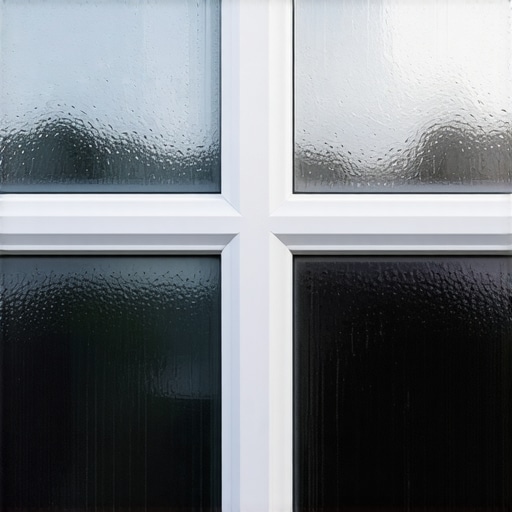
Understanding the Condensation Crisis
A homeowner called me in a panic because their new windows were ‘sweating’ and the glass appeared permanently clouded. I walked into that living room with my hygrometer and showed them the relative humidity was sitting at a staggering 60 percent while the outdoor temperature was plummeting toward freezing. I had to explain that it was not the windows failing; it was their lifestyle and the indoor air quality management. However, there is a massive difference between surface moisture and the milky haze that lives between two panes of glass. When you see fog that you cannot wipe away with a standard window cleaner, you are witnessing the death of an Insulated Glass Unit (IGU). In my twenty-five years as a master glazier, I have seen thousands of units succumb to this phenomenon, and understanding the physics behind it is the only way to determine if you need a simple window repair or if it is time to replace windows entirely.
The Anatomy of an Insulated Glass Unit
To understand why windows fog, you must understand how they are built. An IGU is not just two pieces of glass stuck together. It is a highly engineered sandwich. It consists of two or more lites of glass separated by a spacer bar. This spacer is filled with a desiccant, a material like silica gel designed to absorb any residual moisture left during the manufacturing process. The entire assembly is then double-sealed. The primary seal is usually made of polyisobutylene (PIB), which acts as a moisture vapor barrier. The secondary seal, often a high-strength silicone or polysulfide, provides the structural integrity that holds the sash components together. This environment is often filled with an inert gas like Argon, which is denser than air and provides superior thermal resistance. When this system is intact, the window is a thermal powerhouse. When it fails, the rough opening in your wall becomes a liability.
“Installation is just as critical as the window performance itself. A high-performance window installed poorly will fail.” AAMA Installation Masters Guide
Solar Pumping: The Silent Killer of Seals
The primary reason double-pane windows fail is a process called solar pumping. Every day, the sun hits your windows and heats the gas trapped between the panes. This causes the gas to expand, putting pressure on the primary and secondary seals. At night, the glass cools and the gas contracts. This constant expansion and contraction happens 365 days a year. Over time, this stress creates microscopic fractures in the seal. Once the seal is breached, the Argon gas escapes and is replaced by moist atmospheric air. The desiccant inside the spacer bar attempts to absorb this new moisture, but it has a finite capacity. Once the desiccant is saturated, it reaches its ‘dew point,’ and the next time the temperature drops, that moisture condenses into the visible fog or ‘mist’ you see inside the unit. This is why a window cleaner is useless in this scenario; the problem is internal.
The Role of the Weep Hole and Glazing Bead
Many homeowners do not realize that their window frames are designed to manage water. If you look at the exterior of your window frame, you might see small slots known as a weep hole. These are critical. If the glazing bead (the strip that holds the glass in the frame) allows water to bypass the face of the glass, that water needs a way to escape. If the weep holes are clogged with debris or paint, the IGU will sit in a pool of standing water. This water will eventually chemically attack the secondary seal of the IGU, a process called saponification. Once the seal softens, the solar pumping action accelerates the failure. This is why proper maintenance of the frame and sash is just as important as the glass itself. If the water cannot escape the sill pan, it will find its way into your wall, leading to the rot I have spent decades repairing.
Climate Context: Why the North Suffers Most
In colder climates like Chicago or Minneapolis, the delta between the indoor and outdoor temperatures is extreme. This increases the thermal stress on the glass. In these regions, the U-Factor is the most critical metric. The U-Factor measures the rate of heat loss. A lower number means the window is better at keeping the heat inside. For northern climates, we typically use a Low-E coating on Surface #3. The surfaces are numbered from the outside in; Surface #1 is the exterior face, and Surface #4 is the interior face. Placing the coating on Surface #3 helps reflect the heat from your furnace back into the room. When this unit fails and the gas escapes, your U-Factor spikes, and your heating bills follow. This is the moment when a homeowner must decide if they can simply replace the glass unit or if they need to replace windows entirely to upgrade the frame technology.
“The thermal performance of a fenestration product is only as good as its weakest link, which is often the spacer system or the seal integrity over time.” NFRC Performance Standards Handbook
Technical Repair vs. Replacement: The Glazier’s Perspective
When a client asks about window repair for foggy glass, there are two main paths. The first is ‘defogging,’ which involves drilling small holes in the glass, spraying a cleaning solution inside, and then installing a one-way vent. As a professional, I am skeptical of this method. While it might clear the visible mist, it does nothing to restore the Argon gas or the thermal R-value of the window. It is a cosmetic fix, not a structural one. The second and more permanent option is an IGU replacement. This is where we pop the glazing bead, remove the failed glass unit, and drop in a brand new, factory-sealed IGU. This preserves the existing frame and rough opening while restoring the window’s thermal performance. However, if the frame is made of old, uninsulated vinyl that has warped or if the wood is showing signs of rot, the only logical move is to replace windows with modern fiberglass or thermally broken alternatives.
The Importance of the Shim and Leveling
Even the best IGU will fail prematurely if the frame is not square, level, and plumb. During installation, we use a shim to ensure the frame is perfectly positioned within the rough opening. If the frame is twisted, it puts ‘edge stress’ on the glass. This uneven pressure can cause the seals to fail much faster than they would under normal conditions. Furthermore, the flashing tape must be applied in a shingle-fashion to ensure that any water that gets behind the siding is directed away from the window frame. I have seen countless failures where the installer relied on the nailing fin alone. This is amateur work. A true professional understands that the window is part of the building’s water management system.
Decoding the NFRC Label
When you finally decide to replace windows, don’t listen to the salesman’s anecdotes. Look at the NFRC label. You need to focus on three numbers: U-Factor, SHGC (Solar Heat Gain Coefficient), and VT (Visible Transmittance). In a cold climate, you want a U-Factor of 0.27 or lower. If you are in a sunny area, you want a low SHGC to block the sun’s radiant heat. Do not let someone sell you on triple-pane glass with Krypton fill unless the math supports it; in many moderate climates, the ROI simply isn’t there. You are better off investing in a high-quality double-pane unit with a superior spacer system like a stainless steel or structural foam spacer, which reduces heat transfer at the edge of the glass.
Final Professional Recommendation
Foggy windows are more than an eyesore; they are a signal that your home’s thermal envelope has a hole in it. While a window cleaner might keep the exterior looking sharp, it cannot fix a compromised seal. If you notice moisture between the panes, consult a specialist who understands the difference between a muntin and a sash. Check your weep holes for blockages and ensure your indoor humidity is managed. If the seals have failed, weigh the cost of IGU replacement against a full window upgrade. Remember, a window is a technical instrument designed to manage energy; treat it with the precision it deserves.